Key points
- The study examined the geochemical implications of discharging deep-sea mining waste into oxygen-deficient zones, focused on the nodule-rich Clarion-Clipperton Zone.
- Incubation experiments measured heavy metal mobilization from the reductive dissolution of manganese nodules in simulated waste plumes.
- Researchers found elevated copper levels in the plumes, a potential hazard to mesopelagic communities at depths between 200 and 1,000 meters.
- No commercial exploitation of polymetallic nodules has occurred to date, and the International Seabed Authority is still developing exploitation regulations.
Marine polymetallic nodules, also known as manganese (Mn) nodules, have attracted the interest of mining companies for decades due to their enrichment of metals such as cobalt (Co), nickel (Ni), copper (Cu), and rare earth elements (REEs).
These nodules, which accumulate minerals layer by layer over millions of years, are widely distributed across certain abyssal regions of the ocean. A recent study investigates the geochemical implications of mining waste discharge into oxygen-deficient zones, offering one of the first geochemical perspectives on mining waste discharge in the open ocean.
The study, focused on the nodule-rich Clarion-Clipperton Zone (CCZ) in the Eastern Tropical North Pacific Ocean, simulated waste plumes from proposed deep-sea mining of Mn nodules.
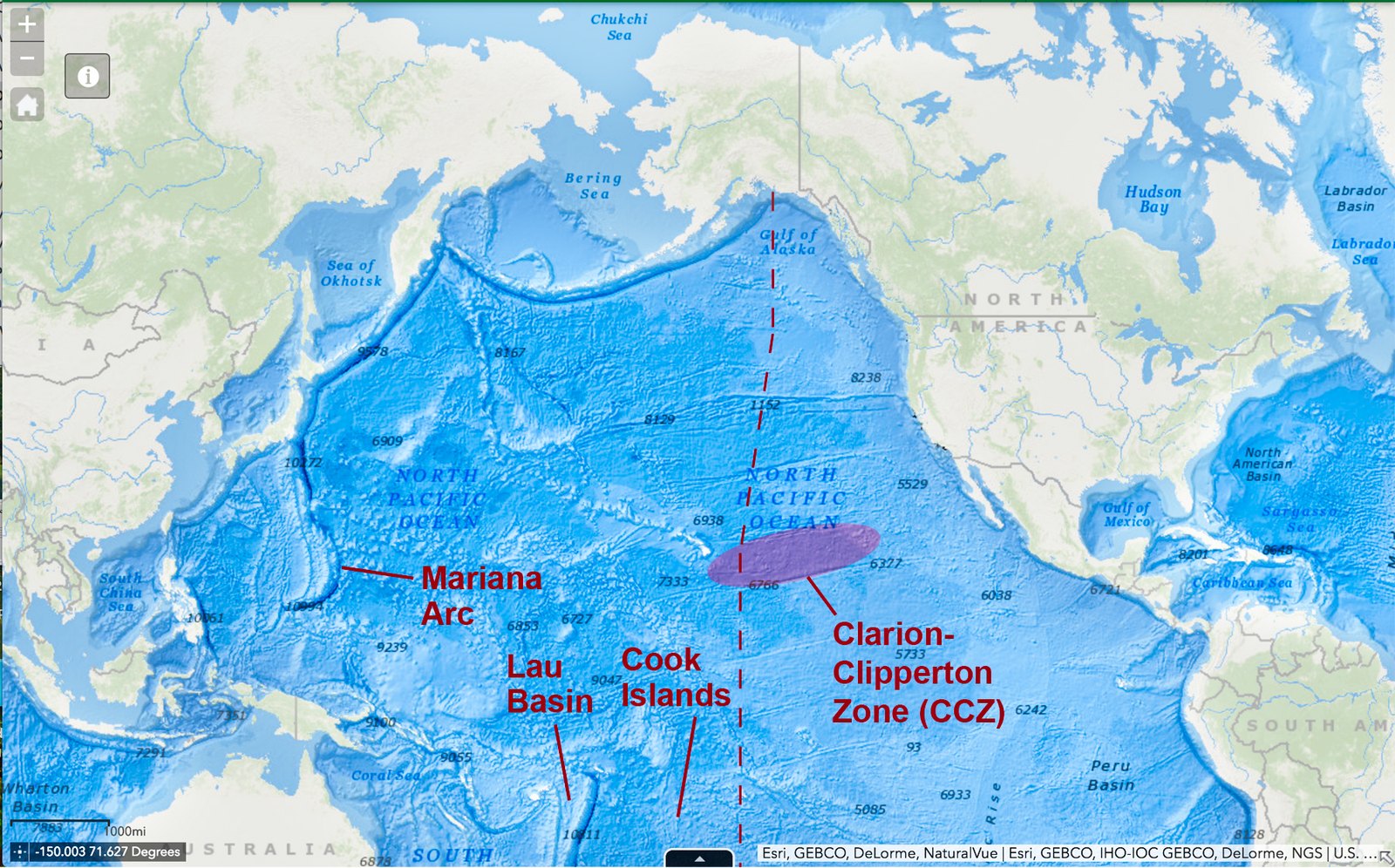
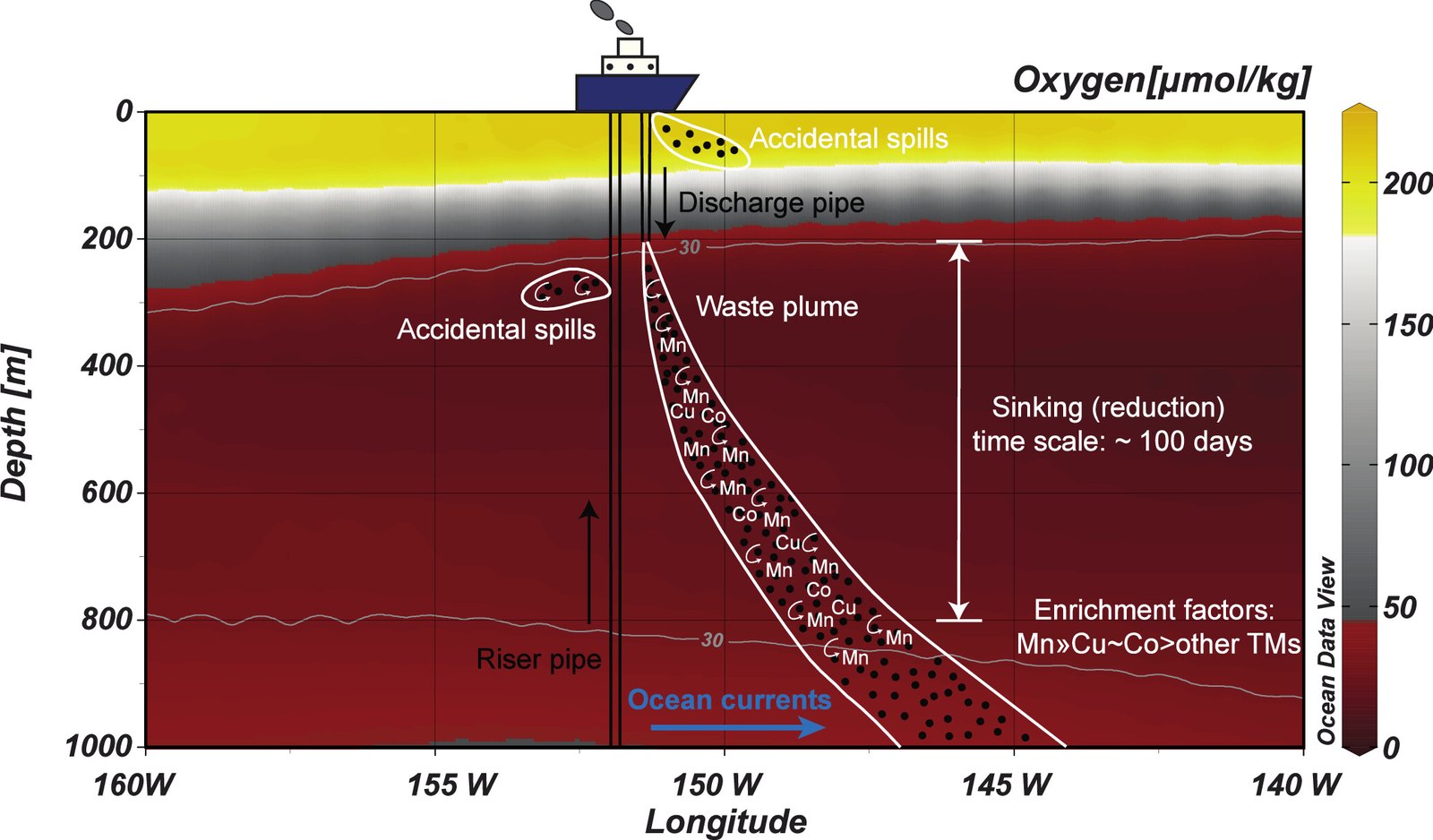
Scientists conducted incubation experiments to evaluate the mobilization of heavy metals from the reductive dissolution of Mn nodules during mining waste discharge. Trace metal clean sampling and analytical procedures enabled them to detect minute concentration changes of dissolved trace metals associated with Mn nodule reduction, as well as estimate the accumulation rates of Mn and other trace metals in the dissolved phase.
One notable finding of the study: Researchers found elevated levels of copper in the plumes, posing a potential hazard to mesopelagic communities found at depths between 200-1,000 meters.
The demand for minerals and metals, such as lithium (Li), Cu, Co, Ni, and REEs, is projected to increase significantly in the coming decades. These materials are essential for building the batteries required for the transition to a low-carbon future. As the demand for these metals is likely to double by 2060, deep-sea mining of Mn nodules presents a potential solution to supplement land-based mining and meet global needs.
To date, no commercial exploitation of polymetallic nodules has occurred, either in the CCZ or elsewhere. The International Seabed Authority (ISA) is in the process of developing exploitation regulations for deep-sea mining, which will include standards and guidelines for waste discharge. The results of this study and others will be integral to shaping these regulations, ensuring that environmental considerations are prioritized in the development of this emerging industry.