Key points
- China has started construction on a 78,000-tonne floating research platform that will double as a seabed mining test range, with completion targeted for 2030.
- The Deep-Sea All-Weather Resident Floating Research Facility is a 138-by-85-metre semi-submersible platform rated for sea state 7, housing 238 personnel for 120-day deployments.
- It can handle equipment up to about 100 tonnes and operate at depths to 10,000 metres, covering CCZ nodules, Pacific seamount crusts, and seafloor massive sulphides.
- China holds five ISA exploration contracts, more than any other state, and the platform’s 2030 completion aligns with the expiry windows on its earliest contracts.
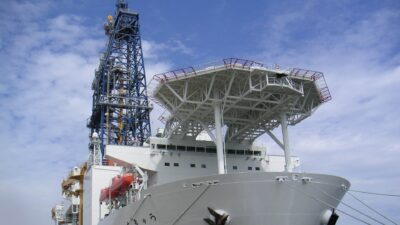
China has started construction on a 78,000-tonne floating research platform whose stated uses include serving as a persistent qualification range for seabed mining systems, alongside offshore oil and gas equipment trials, marine ecosystem research, and typhoon forecasting. Xinhua confirmed the start of work on March 28. Completion is targeted for 2030.
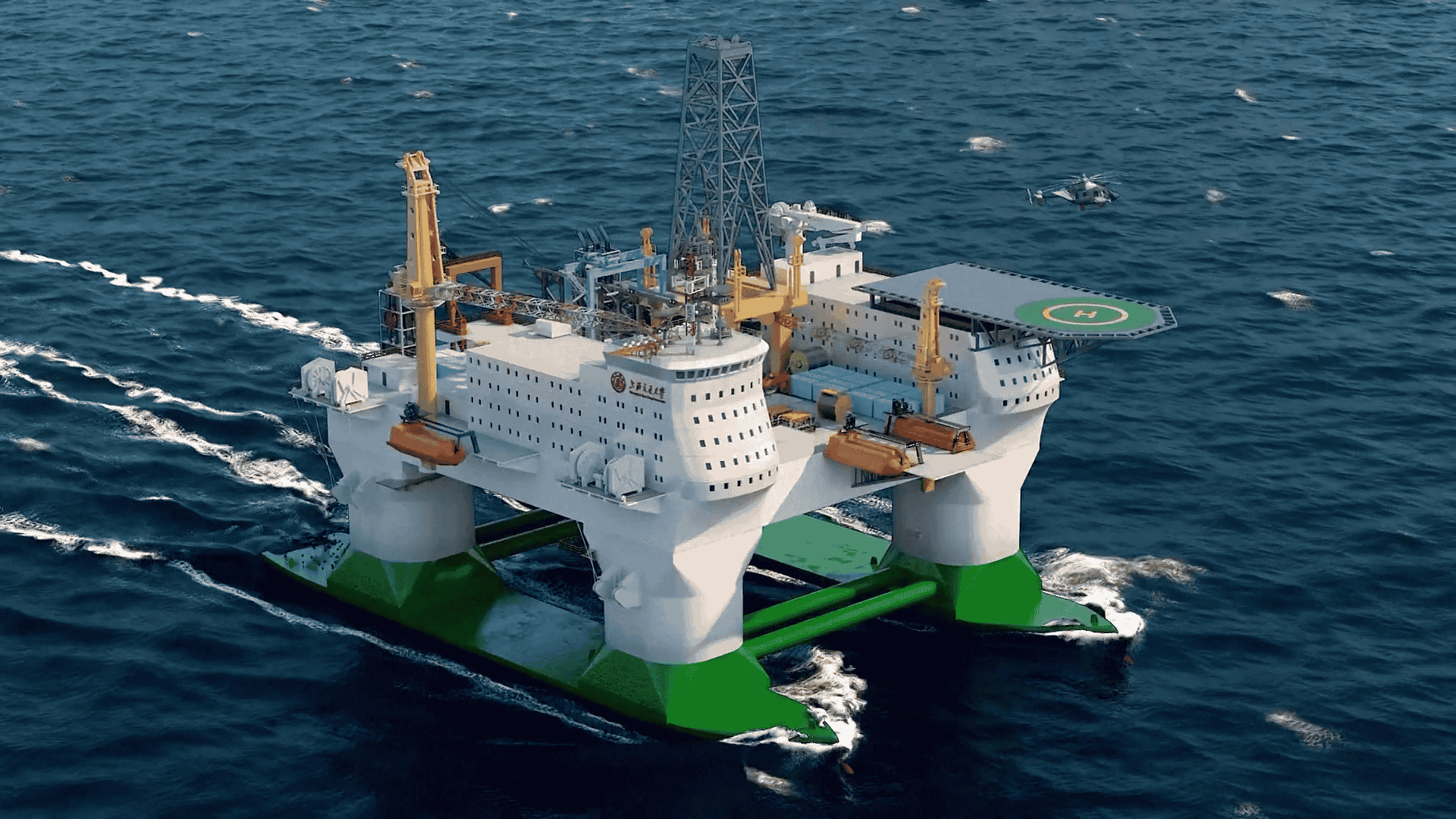
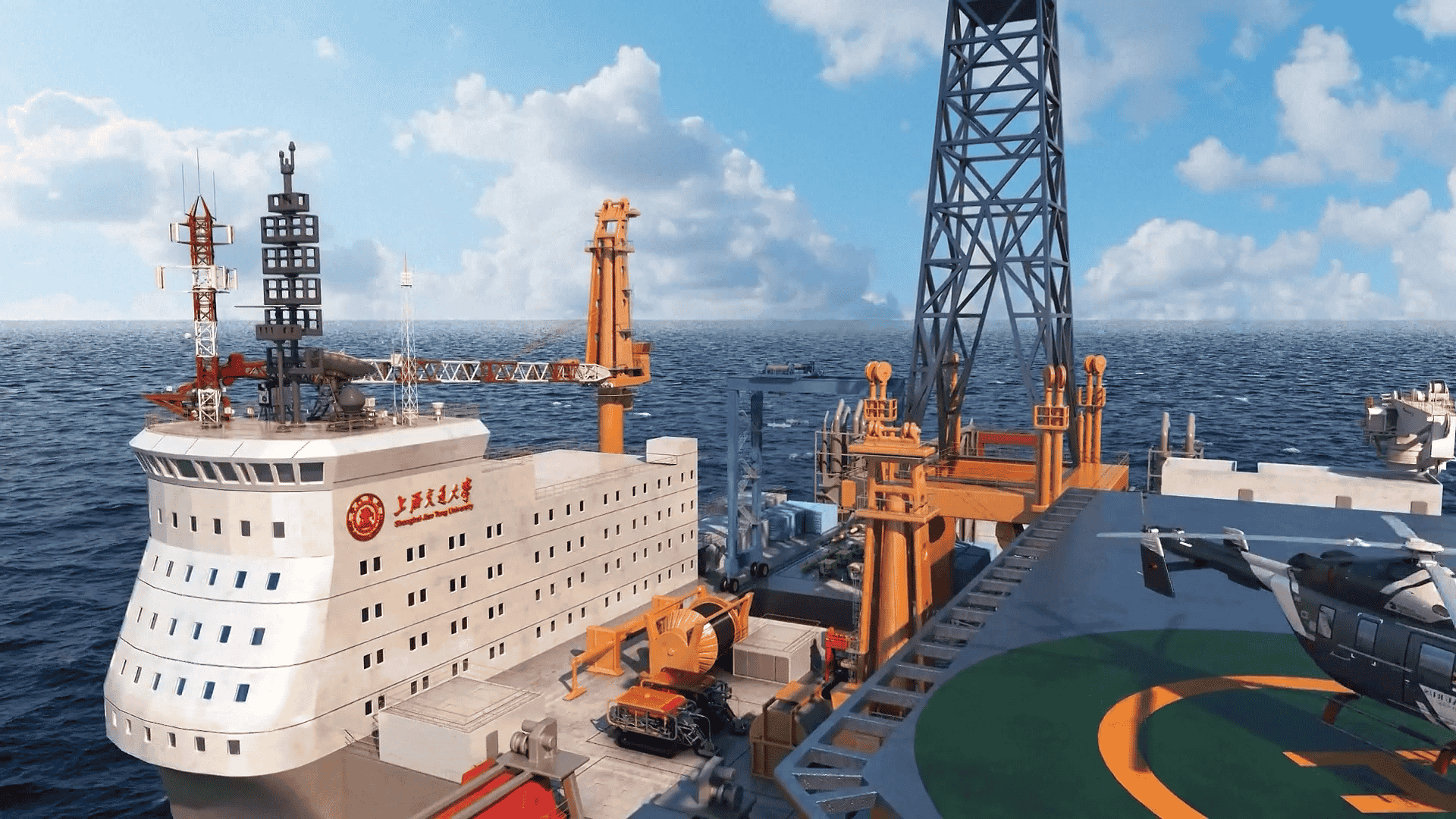
The Deep-Sea All-Weather Resident Floating Research Facility will be a semi-submersible twin-hull platform measuring 138 metres long and 85 metres wide. It will be rated to operate in sea state 7, accommodates 238 personnel on 120-day deployments without resupply, and cruises at 15 knots.
Two specifications matter most:
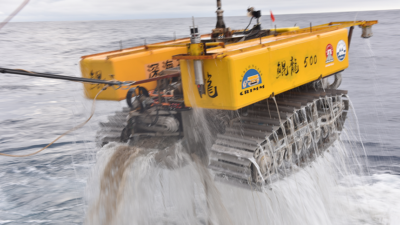
- Equipment handling up to roughly 100 tonnes per unit under test. Large enough to qualify full-scale prototypes of nodule collectors, vertical riser-and-lift modules, and combined collector-buffer assemblies.
- Operating depth to 10,000 metres. Covers every economically relevant seabed minerals target: polymetallic nodules in the Clarion-Clipperton Zone (4,000 to 6,000 m), cobalt-rich crusts on Western Pacific seamounts (800 to 2,500 m), and seafloor massive sulphides (1,500 to 5,000 m).
Why a persistent platform changes testing economics
Chinese contractors (China Minmetals, Beijing Pioneer Hi-Tech, COMRA) currently qualify seabed mining gear from chartered or state research vessels on time-boxed campaigns. Two binding constraints: weather windows shorten available test time per mobilisation, and ship-borne handling caps the equipment envelope.
A persistent floating platform breaks both. Sustained on-station presence through monsoon and typhoon seasons turns trial mining from a multi-year cadence of discrete campaigns into a continuous iteration loop.
For scale reference: The Metals Company’s NORI-D collector trial in 2022 collected roughly 4,500 tonnes of nodules over a six-week campaign, lifting more than 3,000 tonnes to surface from a chartered vessel. That remains the industry’s high-water mark for integrated demonstration.
Strategic context
China holds five ISA exploration contracts, more than any other state, spanning nodules, polymetallic sulphides, and cobalt-rich crusts. Each requires demonstrated technical capacity ahead of a commercial exploitation application. The platform’s 2030 completion aligns with the expiry windows on the earliest Chinese contracts and with the late stage of ISA mining code negotiations.
The platform is one piece of a coordinated national program. In April, the China Geological Survey published a national atlas of deep-sea mineral deposits drawn from two decades of sampling at more than 10,000 sites in the East China Sea and Yellow Sea, mapping cobalt, nickel, manganese, and rare earth concentrations. The atlas (resource mapping in domestic and disputed waters) and the platform (equipment qualification for international waters) cover complementary halves of the same national strategy. Both align with the recently approved five-year plan that lists deep-sea minerals as a development priority.
What to watch
Three signals will indicate whether the platform’s mining role is operational rather than aspirational:
- Contractor slotting. Public allocation of platform time to Minmetals or COMRA test programs is the clearest confirmation.
- ISA filings. EIS submissions and test mining permit applications from Chinese contractors timed to platform availability.
- Subsea equipment tenders. Contract awards from Chinese SOE shipbuilders and subsea vendors are the most concrete leading indicator of the operational schedule.