Key points
- Tonga’s new prime minister, Lord Fatafehi Fakafanua, publicly backed the US-Tonga deep-sea minerals cooperation deal announced February 26, calling it an exciting development.
- Civil society groups in Tonga and across the Pacific warned the deal could harm ocean ecosystems and was reached without adequate public consultation.
- The US has now signed critical minerals cooperation frameworks with more than ten nations, including a similar deal with the Cook Islands the previous month.
- Tonga already partners with The Metals Company (TMC) in the Clarion Clipperton Zone, where TMC has told investors it expects to begin commercial mining by the end of 2027.
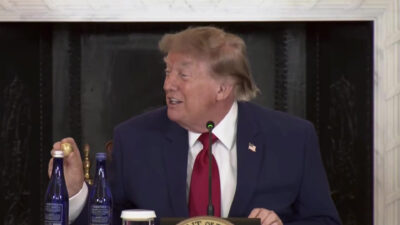
Tonga’s recently elected prime minister has described a partnership with the United States on deep-sea mineral exploration as “an exciting development,” even as civil society groups at home and across the Pacific warn the deal could damage fragile ocean ecosystems and was struck without adequate public consultation.
Lord Fatafehi Fakafānua, who took office in November 2025, offered his first substantive comments on the issue to the Guardian, framing the cooperation through a lens of caution and scientific responsibility.
“With regards to deep-sea minerals, as a nascent industry, Tonga remains fully committed to scientific exploration of our oceans under the multilateral systems we are legally bound to and continues to strictly maintain a cautious approach of firstly do no harm,” Fakafānua said.
The deal, announced on 26 February, commits the US and Tonga to cooperate “to advance marine scientific research for the responsible exploration of seabed mineral resources.” A joint statement from the US State Department declared the two countries “uniquely positioned” to work together and pledged a shared commitment “to responsible exploration of seabed minerals and enhancing global scientific understanding of the deep ocean.”
Pacific Pivot for US Critical Minerals Strategy
The agreement is part of an accelerating US push to secure access to critical minerals across the Pacific — a strategy that fits squarely within Trump administration executive orders issued in April 2025 and February 2026. A similar deal was struck with the Cook Islands last month, and Washington has now signed critical minerals frameworks with more than ten nations globally.
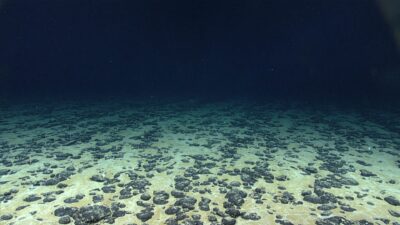
Tonga already has a long-running partnership with The Metals Company (TMC), a Canadian-based firm, for exploration work in the Clarion Clipperton Zone — a vast abyssal plain in the Pacific Ocean between Hawaii and Mexico, lying at depths of 4,000 to 5,500 metres and home to trillions of polymetallic nodules rich in cobalt, nickel, manganese, and copper. No commercial mining has yet taken place.
The New York Times has reported that TMC has told investors it expects to be ready to begin commercial mining by the end of 2027 with American assistance.
“The Pacific Ocean Is Our Home”
Opposition to the deal is strong in Tonga, particularly over the process by which it was reached. Dr ‘Ungatea Fonua Kata, a respected academic and education director of the Free Wesleyan Church — the largest church denomination in Tonga — described the ocean in unambiguous terms.
“The Pacific Ocean is the largest ocean on Earth yet it’s our home, we are opposed to any activity that could damage that environment,” she said.
Legal and Governance Risks
Beyond the environmental debate, legal observers have raised concerns about what the US-Tonga arrangement means for international ocean governance. The US has been moving to unilaterally issue its own seabed mining permits under a revived 1980 statute, effectively positioning itself as an alternative regulator to the International Seabed Authority (ISA) — the UN-backed body that governs deep-sea mining in international waters under the framework of the UN Convention on the Law of the Sea.
Havea has previously warned that if TMC pursues the US regulatory pathway, Tonga could find itself legally exposed: its existing contracts are bound to the ISA framework, and switching pathways mid-stream raises unresolved questions of liability.
What Comes Next
For now, the February agreement is framed as a scientific cooperation deal rather than a commercial mining license. But critics argue that framing obscures what is really a stepping stone toward extraction, and that once the research infrastructure is in place, the commercial logic will be difficult to resist.
With TMC telling investors mining could begin by 2027, and the Trump administration pressing ahead with executive-order-backed permitting outside the ISA, Tonga’s cautious language may soon be tested against harder choices.