Key points
- NMP links the opposition to its project to individuals later implicated in the Fishrot scandal.
- The company argues employment in both fishing and mining may have been compromised as a result.
- The release calls for the objections to the phosphate project to be re-examined.
As details of the #Fishrot Files scandal unfold, it appears that employment in both the fishing and mining industries could well have been compromised by the activities of certain parties implicated in the scandal. The development of and the related potential economic benefits of the Sandpiper Project (“NMP or NMP’s Phosphate Project”) are a specific case in point.
Time to Question the Opposition to Phosphate
It appears the objections to NMP’s Phosphate Project, as proposed and scientifically substantiated by independent environmental assessments, were spearheaded by individuals who are now implicated in, what is perhaps, Namibia’s biggest post-independence corruption scandal, the Fishrot Files.i
In light of the ongoing scandal, it appears those implicated and opposed to the phosphate cannot be trusted as having acted in Namibia’s best interest. These individuals appear to have placed their own interests above that of Namibia’s marine environment, fish resources, employment, and social upliftment.
Against this background, it is fair and reasonable for people to question the motivation for the strenuous opposition to phosphate by those individuals implicated in the Fishrot Files scandal.
Namibia Has Potentially Lost Jobs and Revenue in the Billions
Has Namibia potentially lost billions in revenue and much-needed job creation?
At a project level, if it were to be implemented, the NMP’s Sandpiper Project requires capital investment of N$3.2 billion for the development, along with employment of around 450 Namibians (directly and indirectly) in the Erongo region. In addition, local, regional and national contractors would be required to provide services such as legal, financial, security, transport, catering, mechanical, fuel supply, spares, electrical and port related activities. When operational, the project would generate an estimated N$730m/year toward the Namibian Treasury in the form of taxes (direct and indirect), duties and royalties.
An industry-based Socio-Economic Study (2018) around establishing a phosphate industry in Namibia, circulated within Government, independently demonstrates that the potential economic benefits of establishing a fully- integrated phosphate industry alongside the existing marine diamond mining and fishing industries, if developed back in 2012, could by 2016 have:
- contributed N$14.7Bn to the Gross Domestic Product (9% contribution to GDP)
- contributed N$11.3Bn to Gross National Income
- contributed N$18.7Bn in Export Revenue and
- created Total Jobs of 51,593 (Direct, Indirect and Induced) NMP has a project that is technically, environmentally, and economically viable, as set out in the Feasibility Study (2012) and an Independent Phosphate Industry Study (2018). The findings show the development of the project and industry, as a whole, would provide opportunity for (1) direct employment, (2) outsourcing services such as security, catering, transportation, and (3) creating further employment at a local-and-national level with the development of an integrated Phosphate Industry.
However, until the current court action is completed, the proposed development and economic benefits of NMP’s Phosphate Project remain on hold.
1 | P a g e

Namibian Legislation & Investment
Having invested over N$750 million in this project since 2008, NMP and its shareholders, in both Namibia and Oman, will continue to have confidence in Namibia’s Legislation & Regulatory System, and the country as an investment destination for mining development. NMP has followed government legislation & regulation and fulfilled its obligations to fully investigate its Project’s environmental impacts; the research culminated in NMP delivering a world-class Environmental Impact Assessment (“EIA”), concluding marine phosphate mining will have no significant impact on the marine environment.
Despite the Mining Licence having only a 20-year life, there are defined resources to support over 100 years of mining. NMP is committed to building a long-term sustainable project that will continue to provide jobs and economic benefits for future generations in Namibia. NMP will continue to promote strong working relationships with all relevant government ministries.
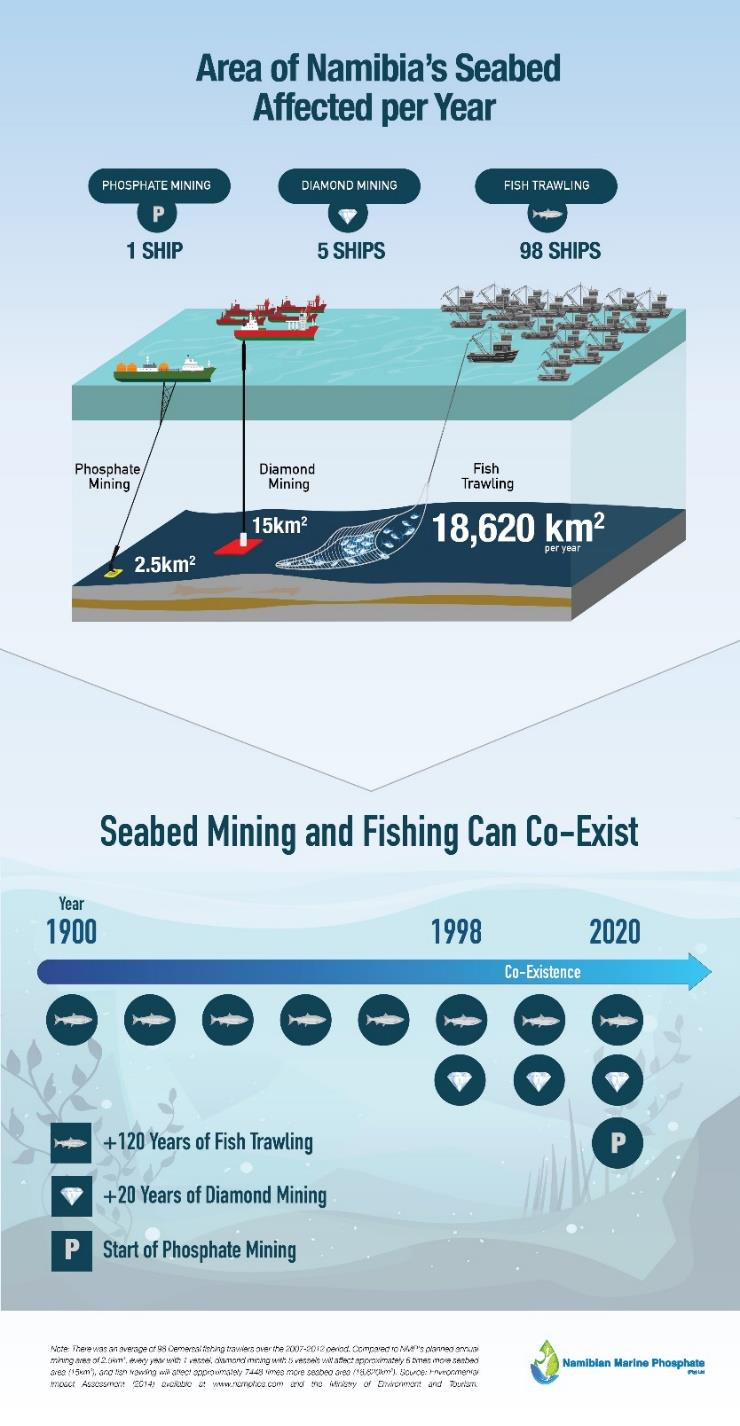
NMP maintains that fishing and phosphate mining can co-exist and welcomes any opportunity for constructive dialogue.
i. https://www.aljazeera.com/investigations/anatomyofabribe/ https://wikileaks.org/fishrot/