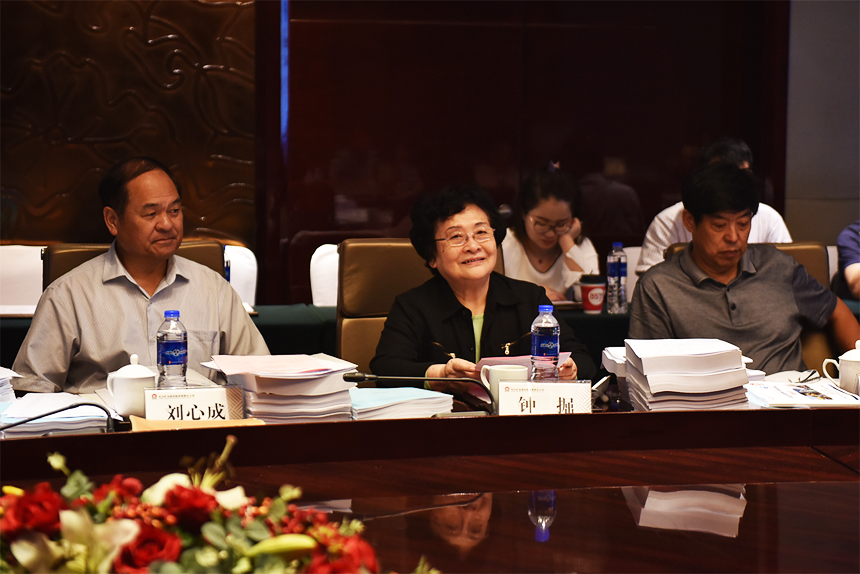
On September 26, 2018, two projects under China’s national ocean special program implemented by Changsha Research Institute of Mining and Metallurgy Co., Ltd. (CRIMM), a China Minmetals subsidiary, “Development and Integration of a Polymetallic Nodule Collection System for Sea Trials” and “500-Meter Sea Trial of the Polymetallic Nodule Collection System,” passed acceptance by an expert panel chaired by Zhong Jue, academician of the Chinese Academy of Engineering, with scores of 96.2 and 96.4 respectively, an outstanding completion of the tasks.
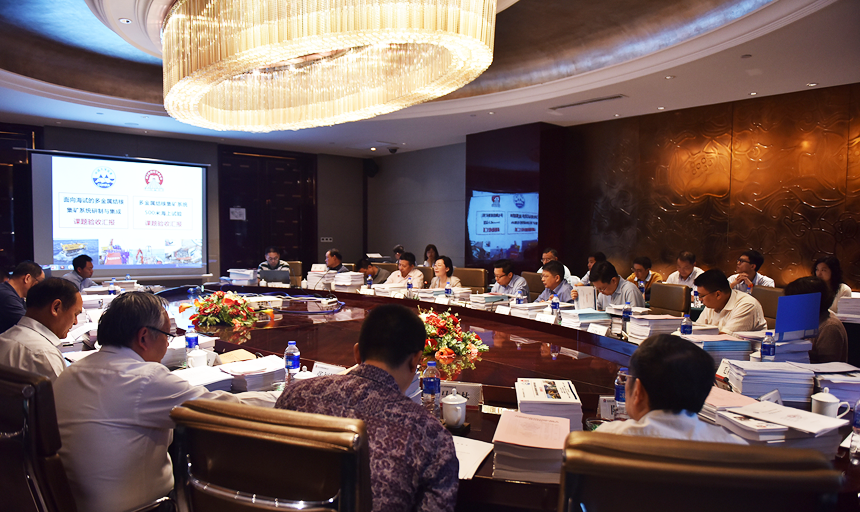
The projects were approved in 2012. After more than two years of multiple rounds of review and four years of dedicated development, with hundreds of laboratory tests, they passed laboratory acceptance in April 2018 and formally entered the sea trial phase.
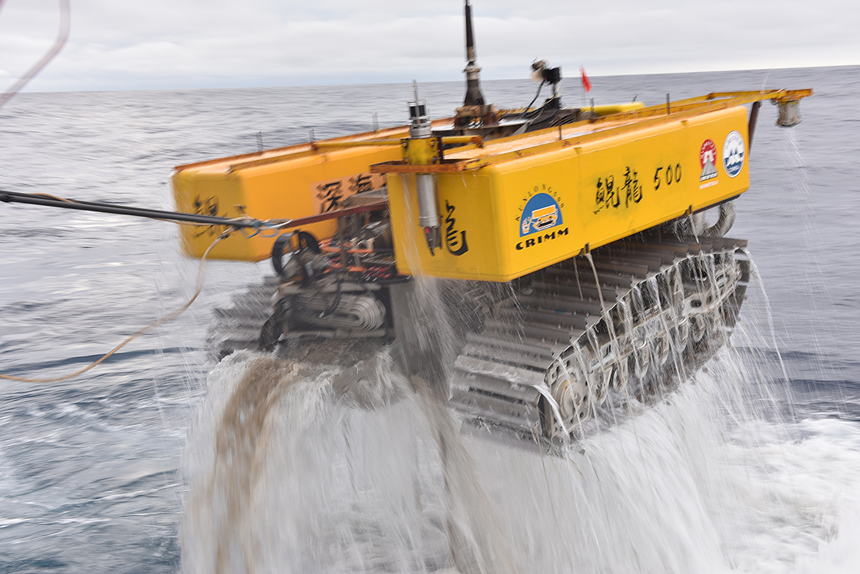
The sea trial ran from May 1 to June 18, lasting 49 days. The Kunlong 500 (a seabed nodule collector vehicle) embarked on the trial ships Changhe Haiyang (Changhe Ocean) and Zhang Jian in turn, completing the two-stage sea trial in the East China Sea and the South China Sea. During the trial the Kunlong 500 made 11 dives, reached a maximum operating depth of 514 meters and carried out intelligent mining operations in automated driving mode along planned collection paths on the seabed, tracing out a five-pointed “Chinese star” with sides 120 meters long in the South China Sea. The project achieved breakthroughs in several key technologies, including driving on soft seabed sediments, hydraulically adaptive collection of seabed minerals, integrated seabed navigation and positioning, and intelligent control, with fully independent intellectual property rights. Coming 17 years after the early collector vehicle lake trial at 130 meters of water depth completed in 2001, this was China’s first sea trial of a nodule collection system and a new milestone in the history of China’s deep-sea mining technology.
From approval to completion, the projects received strong support from the China Ocean Mineral Resources R&D Association (COMRA) and close attention from China Minmetals and CRIMM. CRIMM’s general manager served as head of the project leading group, with the institute’s deputy general manager, the director of the marine institute and the project lead as members, and the whole institute’s resources were committed to the projects’ execution.
During development and execution, an efficient organizational and coordination system, with plans, responsibilities, checks and incentives all in place, underpinned the sea trial’s success. Facing complex and changeable sea conditions during the trial, the command and implementation teams made decisive calls, timed operations well and worked in close coordination, completing all sea trial tasks within the limited weather windows.
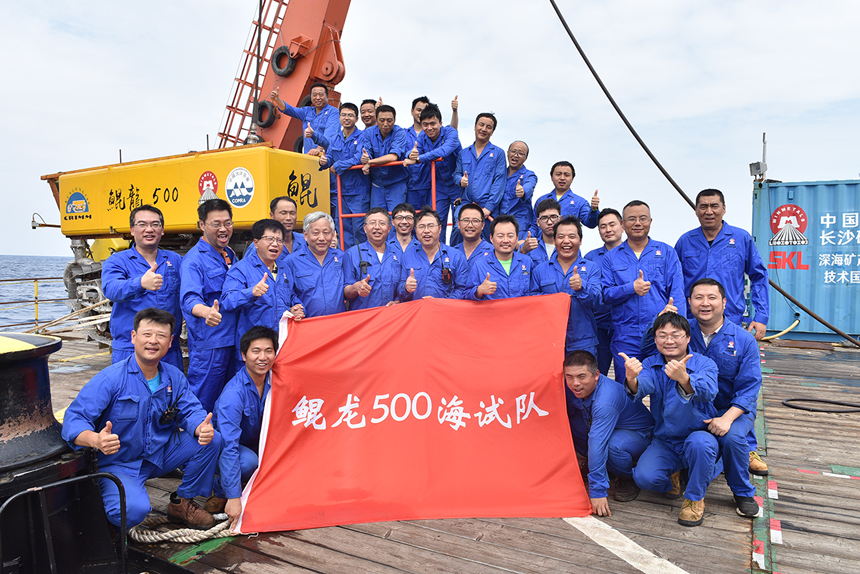
As a component of the major national program Jiaolong Explores the Sea, the work was completed by lead unit CRIMM together with the Changsha Institute of Mining Research, Central South University, Xiangtan University, the CSIC 750 Test Site, Zhejiang Sci-Tech University, Taihe Ocean Technology Group and Harbin Engineering University, among other enterprises, universities and research institutions, another successful example of multi-party collaboration on a major national science and technology project combining industry, academia, research and application.