Key points
- Trans-Tasman Resources lodged its EEZ marine consent application to extract iron sands on 21 October 2013.
- The project covers 65.76 km2 roughly 22-36 km off Patea in water depths of 20-45 m.
- TTR proposes extracting up to 50 million tonnes of sediment a year, producing about 5 million tonnes of iron ore concentrate for export.
- NZIER estimates the project would add about $302 million to GDP and generate around $54 million a year in taxes and royalties.
The Environmental Protection Authority (EPA) has accepted Trans-Tasman Resources Limited’s (TTR) application for marine consents to extract iron sands in the South Taranaki Bight. The application is among the first projects to be considered under the new EEZ and Continental Shelf (Environmental Effects) legislation.
“We are very pleased that the EPA has accepted our application and the public submission process can begin shortly,” said TTR Chief Executive, Tim Crossley. “This is a significant milestone for TTR”.
On 21 October 2013 TTR lodged its application to extract iron sands within the exclusive economic zone (EEZ).
The application is for a project area of 65.76 km2 approximately 22-36 km off the coast of Patea, in water depths of 20-45 m. TTR proposes to extract up to 50 million tonnes of sediment per year and process the sediment aboard a floating processing storage and offloading vessel (FPSO). Around 5 million tonnes of iron ore concentrate will be exported. The remaining sediment will be re-deposited on the seafloor in a controlled manner, usually backfilling previous mined areas.
The EEZ legislation requires the EPA decision makers to consider the effects of the proposal on the environment and on existing interests as well as the economic benefit of the project to New Zealand.
“Since 2009, TTR has spent approximately $8 million on a detailed baseline study programme and modelling of the potential environmental effects using New Zealand and international experts. Based on that research we have substantially refined our extraction and processing methodologies. Our engineering team is working hard to reduce the environmental footprint of the project such as reducing the sediment plume and improving fuel use. That being said the Impact Assessment details the ‘worst-case’ scenarios.”
The scientific reports and the Impact Assessment conclude that the project will not adversely affect the nearshore and coastal environment including public access and surfing.
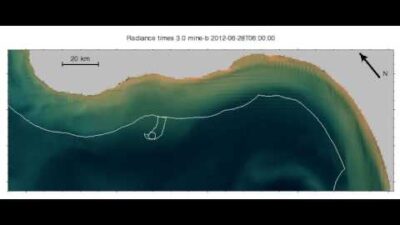
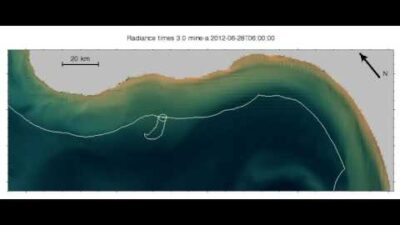
There are likely to visual effects in the immediate vicinity of the extraction area, primarily relating to sediment dispersion in the water column, but these effects will dissipate nearer to the shore. No rare or vulnerable ecosystems or habitats of threatened species, including Maui’s dolphin, have been identified as being potentially affected by the TTR Project.
“We are confident that the high energy environment of the South Taranaki Bight combined with a relative shallow water depth and our proposed extraction methodology, which will only affect a small area at any one time, means the effects of the project will be relatively short lived enabling recolonisation over a timeframe of around 6 months to 2 years,” Mr Crossley explained.
If consented, the project will provide substantial economic benefits to New Zealand and Taranaki. Independent analysis from NZIER suggests the TTR project will contribute approximately $302 million to national GDP, and TTR will pay around $54 million in taxes and royalties, each year.
Approximately 200 personnel will be required to operate the offshore vessels with approximately a further 50 staff being required in support, engineering, administration, environmental and other contracting roles.
“We are also investigating establishing a community trust to ensure that the local communities of South Taranaki benefit from the Project,” said Mr Crossley.
Next steps
Now that the application has been accepted as complete the EPA will notify existing interests, iwi, and the general public. The EPA will publish TTR’s application, Impact Assessment and supporting scientific reports on the EPA website.
The public submission process will begin after notification in the coming weeks. The public can outline their particular concerns with the project so that the EPA’s decision makers can assess those concerns against TTR’s evidence.
Ahead of the submissions process, TTR will hold an information session in Hawera on Wednesday 20 November. TTR staff and advisors will be on hand to answer any questions.
“We are excited to hold another information session. These expo style sessions give the community the chance to learn about all aspects of the project, including potential effects and benefits in a relaxed environment,” said Mr Crossley.
About TTR
TTR is a privately-owned New Zealand company headquartered in Wellington. It was established in 2007 to explore, assess and develop the potential of the rich offshore iron ore deposits off Taranaki and the west coast of the North Island of New Zealand.
TTR has spent more than $50 million on exploration to understand the resource, engineering, marketing, studying the existing physical and ecological environment and identifying potential impacts to develop an iron sands extraction project which balances realising economic development whist protecting the environment.
TTR has identified an economically developable mining area and technology to extract the iron sand in a safe and environmentally world class manner to supply international markets with a reliable supply of low-cost iron ore.
In July 2013 TTR submitted a mining permit application for the project. New Zealand Petroleum and Minerals is assessing that application for technical data on the proposed resource, geology, work programme, as well as TTR’s ability to manage the project, and health and safety.
Once the project receives all of the necessary consents and permits TTR plans to commence commercial production of iron sands in the beginning of 2016.
South Taranaki Information Session
Wednesday 20 November 2013 11am -3pm
TSB Hub – West Lounge (next to the Waihi Road car park)
Hawera