Key points
- Trans-Tasman Resources Limited is a private New Zealand company established in 2007 to explore North Island west coast iron sand deposits.
- The project would excavate up to 50 million tonnes of seabed material per year, with about 10% processed into iron ore concentrate for export.
- The project area covers 65.76 km2, located 22-36 km offshore from Patea in water depths of 20-42 metres.
- TTR has spent more than $50 million on exploration overall and about $8 million since 2009 on environmental baseline data collection.
QUESTIONS AND ANSWERS: Trans-Tasman Resources South Taranaki Bight Project
Trans-Tasman Resources
Who is TTR?
Trans-Tasman Resources Limited (TTR) is a private New Zealand company that was established in 2007 to explore the North Island’s west coast iron sand deposits. TTR is headquartered in Wellington New Zealand and is funded by New Zealand and international investment. TTR holds a Continental Shelf Act prospecting licence in the exclusive economic zone in the South Taranaki Bight and a Crown Minerals exploration permit offshore between Oeo and Patea. TTR also has applied for subsequent offshore exploration permits under the Crown Minerals Act for iron sands between Patea and Santoft, and between the Waikato River and Awakino on the west coast of the North Island. In July 2013 TTR applied for mining permit 55581 for the South Taranaki Bight Project.
Since inception TTR has spent more than $50 million on exploration to understand the resource, engineering, marketing, studying the existing physical and ecological environment and identifying potential impacts to develop an iron sands extraction project which balances realising economic development and protecting the environment. Based on this scientific information TTR has identified an economically developable mining area; assessed the surrounding environment and proposed technology to extract the iron sand in a safe and environmentally sustainable manner.
Project Overview
What is the South Taranaki Bight Iron Sands Project?
The TTR Project involves the excavation of up to 50 million tonnes per year of seabed material, the beneficiation of the iron ore on a Floating Processing Storage and Offloading Vessel (FPSO) and then exporting the iron ore concentrate to international markets.
Around 10% of the extracted material will be processed into iron ore concentrate for export, with residual material (approximately 45 million tonnes per year) returned to the seabed as de-ored sediment via a controlled discharge at depth below the FPSO. Most of the de-ored sediment will be returned as backfill into previously extracted areas.
Iron ore concentrate from the FPSO will be slurried to the floating, storage and offloading vessel (FSO) where it will be de-watered and stored ready for transfer to bulk carrier vessels for export to world markets. Transfer will take place near the Project area, although during adverse weather situations, transfer will take place in a sheltered location in the general South Taranaki Bight or nearby.
The Project area is 65.76 km2 and is located between 22-36 km offshore from the coast of Patea and in water depths between 20-42 m. This is within New Zealand’s exclusive economic zone (EEZ) and the environmental effects are governed by the new Exclusive Economic Zone and Continental Shelf (Environmental Effects) Act 2012 (EEZ Act), rather than the Resource Management Act 1991. TTR has applied for a 20 year mining permit (55581) for the project area, and has applied for marine consents for the same area under the EEZ Act.
For a summary of the project see http://www.ttrl.co.nz/assets/Downloads/TTR-Project-Summary-24-October.pdf.
How will the sediment be extracted?
Seabed material will be excavated using a subsea sediment extraction device (referred to as a “Crawler”) which pumps the sand by a slurry delivery pipe to the FPSO where it will be processed to separate out the iron ore.
The Crawler operates on the seafloor. Its suction head pumps seawater via nozzles to the extraction face to fluidise the sediment, and pumps the sediment into the delivery pipe which delivers the sediment to the FPSO for processing.
The Crawler operates in 300 m x 300 m blocks, extracting a “lane”. The FPSO will winch itself up and down each lane along with the Crawler, re-depositing de-ored sand as it goes, usually backfilling previously mined lanes. This happens very slowly at a rate of around 70 m/hour.
The Crawler will extract sand to the full depth of the economic ore deposit (from the seabed to as deep as 11 metres depending on resource distribution) during each extraction sequence. This ability to mine the full depth of the sediment down to the economic base minimises the area of seabed affected at any one time.
How is the iron ore separated?
“Beneficiation” is the term given to the extraction of iron ore from the source material and concentration to a commercial grade. TTR’s beneficiation process separates the titano-magnetite using a combination of conventional screening, magnetic separation and grinding, to produce a product with a target mass yield in the order of 10% from the raw sediment. Initial screening will remove material greater than 2 mm in size, as this material has been shown to contain no titano-magnetite.
The process does not involve the use of any additional chemicals or the use of heat.
Where else has similar seabed mining been undertaken?
De Beers use similar crawler technology to recover diamonds off the Namibian coast using a vessel called “Peace in Africa” but in water considerably deeper than where TTR is planning. TTR is proposing an enhanced de-ored sand disposal method in comparison with De Beers operation.
TTR’s operation is basically a shallow water dredging operation similar to those carried out worldwide by many companies. In particular, IHC Merwede, TTR’s technology partner has decades of experience in projects of a similar scale to TTR’s operation.
Is this deep sea mining?
No, the TTR project is located in relatively shallow water (between 20 and 45 m deep). Environmental information gathering and monitoring in the shallower waters is much easier and thus is more comprehensive. Since 2009 TTR has spent approximately $8 million collecting baseline data and researching the existing environment and potential effects on the South Taranaki Bight. When TTR’s application is notified, TTR will have added to the existing knowledge about benthic (seafloor) organisms in the South Taranaki Bight, collecting data from video and still camera transects at 144 sites, samples at 116 sites and cores at 103 sites. Based on this extensive research undertaken by TTR, and previous research in the South Taranaki Bight, NIWA has concluded that there are no sensitive environments, unusual species or vulnerable species in the area. This research has also assisted the experts to understand and predict the potential impacts.
A key difference is in recolonisation rates. In TTR’s shallow water it is expected species will repopulate relatively quickly due to both the proximity to light (which provides energy for food sources), that the substrate won’t be appreciably altered by TTR’s mining and a consequence of the organisms being adapted to a “disrupted” environment (storms etc.). In deep water ecosystems, the environment is very stable and so the organisms do not have a biological need to repopulate quickly and due to low light levels growth rates are low hence recolonisation takes a longer time.
Potential Environmental Effects
How does TTR know what the effects will be?
TTR has selected NZ’s leading independent consultancies, supported in critical areas by overseas experts, to investigate the current environmental conditions and advise on the potential effects. The methodology adopted by these consultants is based around accepted international best practice. In addition, TTR has had major technical reports peer reviewed by independent external experts.
Since 2009 TTR has spent over $8 million collecting baseline data and researching the existing environment and potential effects on the South Taranaki Bight. This research has included collecting metrological ocean (met ocean) data on currents, waves, winds, beach profiles and sediment movement at various sites in the South Taranaki Bight from June 2011 – April 2012. When TTR’s application is notified, TTR will have also added to the existing knowledge about benthic (seafloor) organisms in the South Taranaki Bight, collecting data from video and still camera transects at 144 sites, dredges at 116 sites and cores at 103 sites.
This extensive data set has enhanced the collective knowledge of the South Taranaki Bight and assisted TTR’s experts to understand and predict the potential impacts. This information will soon be in the public domain.
For a summary of these effects see TTR’s website http://www.ttrl.co.nz/assets/Downloads/TTR-Project-Summary-24-October.pdf.
What is the environment in the South Taranaki Bight?
The seabed within the TTR extraction and re-deposition area is considered to be a dynamic and high energy environment. This environment is continually being disturbed by the prevailing waves, currents and moderately frequent storm events. Populations of organisms living within this environment must be either fully mobile or, if not, capable of rapid recolonisation following disturbance. The main sessile (immobile) species that are present in the TTR extraction and re-deposition area are such opportunists, frequently among the first organisms to re-colonise a disturbed area.
The biological communities present within the TTR extraction and re-deposition area have limited biodiversity and are dominated by short lived, opportunistic tube worm species such as sabellid and paraonid polychaete worms. The absence of long-lived organisms is indicative of a highly disturbed environment.
How long will it to take to recolonise the site?
The high energy environment combined with a relatively shallow water depth (20-45 m), and TTR’s proposed extraction methodology, which will only affect a minimal seabed area at any one time, means the effects of the project will be relatively short lived enabling the rapid re-establishment of the pre-existing flora and fauna.
International experience suggests that after an initial disturbance to seabeds similar to the South Taranaki Bight, “pioneering” organisms, such as small, tube-dwelling polychaetes worms and small bivalves colonise the surficial sediments. TTR’s extraction area is currently dominated by early successional species such as the polychaete Euchone sp (tube worms). These opportunistic species occur in relatively high abundances and low diversity. These characteristics will facilitate recolonisation over a timeframe of around 6 months to 2 years.
What impact will the project have on recreational fishing and diving in the South Taranaki Bight?
Evidence suggests there is very little recreational fishing activity in the immediate vicinity of the extraction area, being so far offshore, and so a navigational safety buffer around the extraction area is unlikely to have any effects at the regional level.
Adverse effects to recreation and tourism are likely to be localised to the immediate vicinity of the extraction area. These effects relate to the navigational buffer zones around TTR’s vessels, local turbidity effects (up to 10 km from the site) and short-term effects on habitat in recently mined seafloor. There are unlikely to be any noticeable effects in inshore recreational settings.
What impact is the project expected to have on commercial fishing?
It is expected that there will be minimal or no negative impacts from TTR’s operations on existing commercial fishing rights with regard to quota value, downstream businesses, or fish stock sustainability as a consequence of TTR’s operations, in particular in respect of spatial displacement. TTR plans to work with commercial fishers in the region to develop conditions of consent to ensure TTR’s proposed operations do not adversely impact on existing commercial fishing rights.
What is the likely effect on marine mammals in the area, including Maui’s dolphin and blue whales?
The project area is not a recognised habitat for marine mammals. Based on sightings and habitat modelling, Maui’s dolphins and blue whale are not found in the vicinity of the project area; therefore no interactions with marine mammals are anticipated. Regardless, TTR will establish protocols for encounters with marine mammals to ensure adverse effects do not arise.
What will the sediment plume look like?
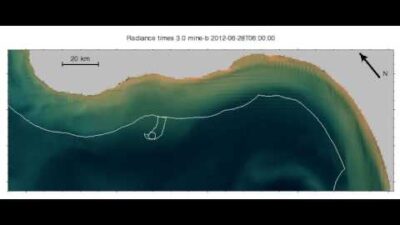
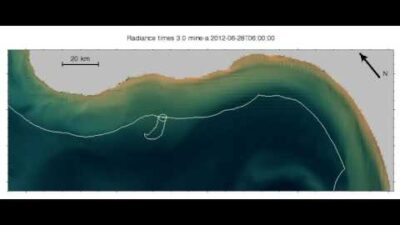
A sediment plume derived from mining will contribute to the total suspended sediment concentrations within a few kilometres of the project area, but the sediment plume decreases with distance from the project area, and will be insignificant relative to the natural suspended sediment concentrations near the coast. The impact the sediment plume may have on the coastal and nearshore South Taranaki Bight waters including aquatic ecosystems, human observers, fishing and diving is therefore expected to be low.
What impact will the project have on the South Taranaki coastline?
NIWA’s investigations and modelling have demonstrated that there will be no change to wave climate. It is also understood that there is little linkage between sediment flow at the mining area and the coast. Consequently no change to the topography of the coastline or its erosion characteristics is anticipated.
How will TTR protect against unplanned events?
Unplanned events such as oil spills or other substance with potential adverse water quality or environmental effects, fire, explosion, serious accidents on board ships, natural disasters or any other event that can cause serious damage to structure or equipment puts human health and the environment at risk.
As much as possible TTR want to reduce the likelihood of an unplanned event occurring. To that end TTR has been working with Maritime New Zealand, the High Hazard Units of the Ministry of Business Innovation and Employment, Taranaki Regional Council and Horizons Regional Council, our vessel designers and classification society to identify hazards associated with TTR’s project and identify ways such that the risk can be minimised and reduced to As Low As Reasonably Practicable (ALARP).
TTR will also develop a comprehensive Crisis and Emergency Response Plan (CEMP). The CEMP will identify the potential risks to TTR operations and the events which will cause the CEMP to be activated. The plan will ensure that appropriate individuals and organisations are kept apprised of developments related to the emergency situation in a timely and efficient manner. The plan also identifies the authority and procedures by which these persons may respond to these situations. The plan will complement the normal health and safety operations of TTR and to prevail only during emergency/crisis situations.
Economic Benefits
How many jobs will the South Taranaki Bight Project create?
Around 200 personnel will be required for the offshore vessels (the FPSO, FSO and the Anchor Handling Tug). Additionally, approximately 50 fulltime equivalents will be employed by TTR, including administration, engineering, environmental staff and other contractors.
There will be increased opportunities for residents of Taranaki and Whanganui to access training and work experience that is relevant to the range of positions associated with TTR’s operations.
What are the economic benefits for New Zealand?
NZIER undertook an assessment of the potential economic benefits of the TTR Project. NZIER estimate the Project will increase the size of the New Zealand economy by:
What are the local benefits for South Taranaki?
NZIER estimate the Project will benefit the Taranaki regional economy by raising regional GDP by 3% or $240 million year, and should create around 170 indirect jobs throughout the rest of the regional economy.
TTR is investigating establishing a community trust, to support local community projects, and ensure that the local communities of South Taranaki benefit from the Project.
It is also expected that there will be employment opportunities for South Taranaki people, and some staff are expected to be resident in South Taranaki thus providing further economic benefit to the area.
How much will the project cost?
The Project will cost around US$ 500 million dollars to construct the vessels and mining equipment. The ongoing operating expenses are projected to be around US$ 180 million per year. The majority of the operating expenses relate to freight, domestic inputs and labour costs.
Why isn’t TTR adding value to the iron sands in New Zealand?
TTR is adding value to the iron sands by creating an iron ore concentrate. To produce a metallurgy treatable concentrate for use in a steel mill the iron ore, or iron sand, has to be ground for mineral liberation, enriched for concentration and dewatered for transportation. TTR will be undertaking all three of these steps before exporting the iron ore concentrate.
Marine Consents Process
Will the public have an opportunity to input in the approvals process?
Yes. As required under the EEZ Act, there will be a 20 working day period in which the public can make submissions. Information about how to make submissions will be published on the Environmental Protection Authority (EPA) website http://www.epa.govt.nz/EEZ/trans_tasman/Pages/default.aspx.
How does the EPA’s EEZ Act process work?
The EPA’s EEZ Act process is similar to that of the Resource Management Act’s (RMA) projects of national significance process, but with a number of legal differences that alter the application and the decision making process.
As in the RMA, a decision is not based on the numbers of submissions for or against a particular proposal; rather the process considers the effects of the proposal on the environment and existing interests as well as the proposal’s economic benefit to New Zealand.
In short, the process the EPA has to follow when assessing marine consents is:
The entire process is completed within a timeframe of approximately 7 months from the date notification.
The EPA’s decision can then be appealed to the High Court on points of law only.
Download this document