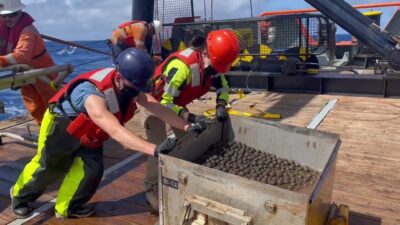
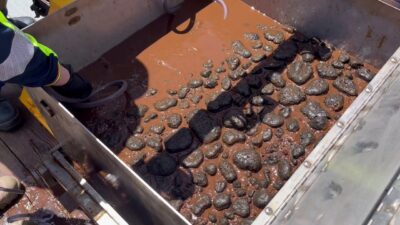
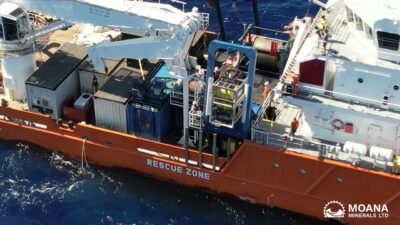
Key points The episode covers free fall grabs, the final tool the onboard team uses to test for nodules on the seafloor. The grabs also provide data on nodule density where nodules are present.
Key points The box core recovers an undisturbed sample of the seafloor, allowing analysis of nodules in their original position and collection of macrofauna present on the surface. Sediment beneath the nodules is examined for data on the animals living in the soil, macroscopic organisms and…
Key points Norwegian government plans January 2024 decision on opening continental shelf for deep-sea mining after 20+ years of exploration and research. Three types of deposits targeted: cobalt-rich manganese crusts and massive sulfides (no polymetallic nodules found in Norwegian waters).…
Key points Expedition 4 departs Rarotonga for a site 240 nautical miles to the northeast. The team plans to spend four weeks in the area conducting environmental research. Research aims to better understand the distribution and quantities of polymetallic nodules in the area.
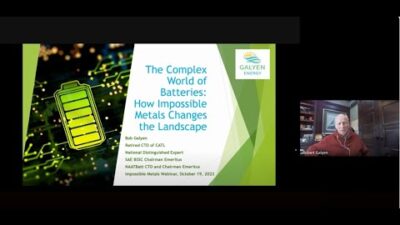
Key points Bob Galyen, retired CTO of CATL, presents Impossible Metals’ monthly webinar covering why China succeeded in batteries, megatrends, supply-demand growth and the circular economy model. Galyen says Impossible Metals plans to use a biological degradation process with bacteria…
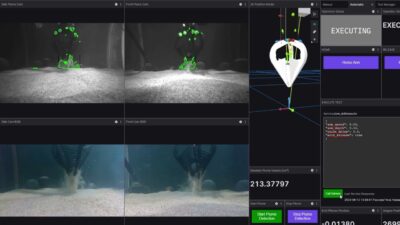
Key points Impossible Metals uses a specialized test tank to refine the design of the arm and end effectors used to pick up nodules. Designers and researchers use the tank to compare different end effector designs and measure the amount of sediment suspended during nodule pickup.