onOctober 26, 2020 DeepGreen Shorts – Dirty Work DeepGreen Shorts - Dirty Work: a video from The Metals Company.
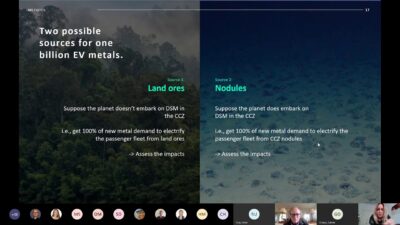
The Metals Company Video onOctober 23, 2020 Webinar: Where should the metals for the green transition come from? – CEP, Imperial College London Imperial College London's CEP hosted a webinar on battery metals. The study found nodules emit more than two-thirds less CO2 than land ores.
The Metals Company onAugust 25, 2020 The Metals Company partners with global research institutions to advance deep-sea science program TMC is investing over 60 million dollars with top research institutions to study deep sea nodule collection impacts.
The Metals Company Video onAugust 5, 2020 DeepGreen webinar: Redesigning the material basis of our civilization (Imperial College London) Gerard Barron addressed students at Imperial College Business School. DeepGreen needs $250 million more to reach production on Project Zero.
The Metals Company Video onJune 3, 2020 Where should the metals for the green transition come from? Researchers compared land and seabed sourcing for EV battery metals. Land ores would emit triple the CO2 of seabed nodules.
The Metals Company onApril 27, 2020 The Metals Company releases study comparing impacts of land ores to polymetallic nodules A Metals Company commissioned study found seafloor nodules could cut CO2 emissions 70 percent versus land ore mining.
The Metals Company onApril 7, 2020 The Metals Company acquires third seabed contract area to explore for polymetallic nodules The Metals Company acquired Tonga Offshore Mining, gaining a third CCZ seabed area with 756 million tonnes of nodules.
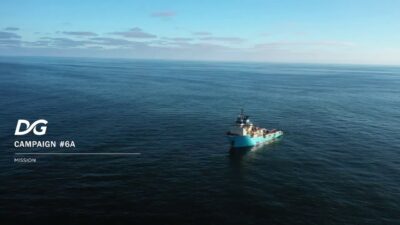
The Metals Company Video onMarch 11, 2020 Expedition 6A: Deep Seabed Exploration Geologist Rick Miller details Leap Energy's Box Corer program. It targets 126 box cores from 4,200 to 4,500 meters deep.
The Metals Company Video onMarch 11, 2020 Nauru & Deep Sea Mining NORI holds a 5,000 sq km Pacific seabed exploration contract area. Production is expected in five to seven years, with royalties then paid to Nauru.
The Metals Company Video onMarch 11, 2020 Mission: Zero-tailings Metallurgy Kingston Process Metallurgy is testing DeepGreen's manganese nodules. The test heats nodules to 900C then smelts them at 1,500C.