Key points
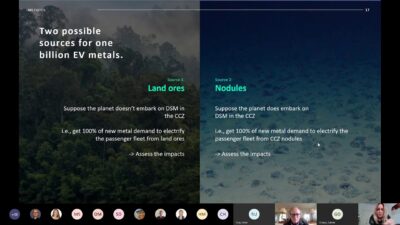
- The yearlong study, led by consultant Daina Paulikas and marine ecologist Dr. Steven Katona, compares environmental, social and economic impacts of sourcing battery metals from land ores versus deep-sea polymetallic nodules, using a scenario of 1 billion electric vehicles.
- Producing the nickel, cobalt, copper and manganese for a billion EV batteries from land ores would emit about 1.5 gigatons of CO2, compared with under half a gigaton using nodules, a reduction of more than two-thirds.
- Land-based sourcing would generate about 64 billion tons of waste and put an estimated 47 trillion megafauna at risk, versus a seafloor with about 12 times fewer organisms for nodule collection.
- The World Bank projects metals demand will rise by 500 percent by 2050, the demand pressure the study cites as the reason to compare these two metal sources.