Key points
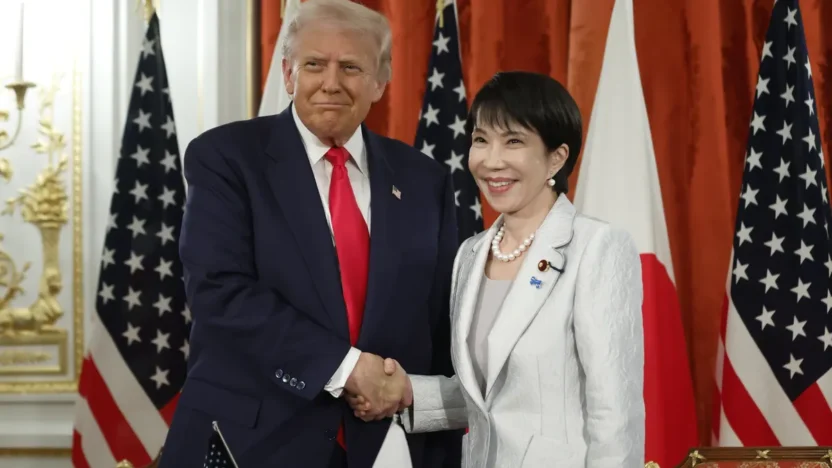
- The US and Japan signed a Memorandum of Cooperation on March 19, 2026 during a Trump-Takaichi summit, targeting joint R&D on seabed mineral extraction.
- The deal focuses on rare-earth-rich muds near Japan’s Minamitorishima Island, alongside a secondary focus on polymetallic nodules.
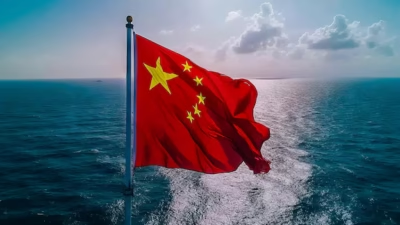
- China controls around 60 percent of global rare earth mining and up to 85 percent of refining and separation capacity, a key driver of the deal.
- Japan’s rare-earth muds project near Minamitorishima began in 2014; in January 2026 the vessel Chikyu set sail to fit extraction equipment.
The United States and Japan have formalised a critical minerals action plan that puts deep-sea extraction at the centre of allied supply chain strategy. Announced on March 19 during a Trump-Takaichi leaders’ summit in Washington, the agreement includes a new Memorandum of Cooperation specifically targeting joint research and development into commercially viable seabed mineral extraction.
The focal point is rare-earth-rich muds near Japan’s Minamitorishima Island — a remote coral atoll roughly 1,900 kilometres southeast of Tokyo — where deposits are described by the White House as capable of meeting “centuries’ worth of industrial demand.”
Why it matters
This is the first formal bilateral framework between the US and Japan that directly links deep-sea mining to allied supply chain security. It moves the conversation from exploration science into geopolitical infrastructure, with both governments treating seabed resources as a strategic asset rather than a long-term research curiosity.
The driver is China. Beijing currently controls around 60% of global rare earth mining and upwards of 85% of refining and separation capacity. Japan — which still imports roughly 60% of its rare earths from China, down from 90% before its post-2010 diversification push — has been accelerating its seabed programme since early 2026 in response to Chinese export restrictions on dual-use minerals.
What the deal covers
The agreement has two main components relevant to deep-sea mining:
- A Memorandum of Cooperation to accelerate joint R&D and industry cooperation on seabed mineral extraction, with a primary focus on the Minamitorishima rare-earth muds and a secondary focus on polymetallic nodules
- A data-sharing framework covering Japan’s active seabed research projects, to identify opportunities for US-Japan co-investment and co-development
Beyond deep-sea minerals, the broader action plan includes strategic trade policies, potential border mechanisms to protect downstream industries, and the foundation for a plurilateral trade agreement supported by price floors on critical minerals.
Where Japan’s programme actually stands
Japan is not starting from scratch. The rare-earth muds project near Minamitorishima began in 2014 and has moved through several research phases. In January 2026, the government-operated vessel Chikyu set sail to fit extraction equipment below the surface. The target is to lift rare-earth-bearing mud from approximately 6,000 metres depth for processing tests as early as February 2027 — which would be the first continuous deep-sea rare earth lift attempted anywhere in the world.
Japan’s state minerals body JOGMEC also conducted a successful cobalt-rich crust excavation test in 2020, giving the programme some operational credibility.
The technical and commercial reality
The timeline to commercial production remains distant. Experts note that even if the 2027 test yields a promising resource, cost and logistics present major hurdles. Large-scale commercial seabed metal extraction has never been achieved. Operating at 6,000 metres under extreme pressure involves engineering challenges that are unlikely to be resolved quickly, and will require sustained government backing regardless of technical success.
The deal with the US may help on that front. Shared costs, shared data, and the political weight of a bilateral framework could sustain funding through phases that might otherwise be deprioritised in a domestic budget cycle.
Bottom line
The US-Japan critical minerals agreement is a meaningful escalation in how allied governments are treating deep-sea mineral resources — no longer as speculative science, but as a near-term strategic priority. For the deep-sea mining sector, it signals growing state-level demand for commercial pathways. Whether the Minamitorishima project can deliver on the scale both governments are implying remains to be seen, but the geopolitical pressure to make it work has never been higher.