Key points
- NOAA published both of TMC’s seabed applications in the Federal Register three days apart: the Notice of Intent for the USA-B environmental review on August 17, and public notice of the consolidated USA-A application on August 19. Comments on USA-A close October 19.
- GoldCoast Resource began trading on the CSE on August 10. The Metals Royalty Company closed a US$165 million financing on August 24 and doubled its Mesabi royalty to 2.0 percent.
- A Department of Energy official said the only cobalt refinery in the United States, newly funded with US$100 million, could in time process deep-sea nodules.
The National Oceanic and Atmospheric Administration, NOAA, published both of TMC’s seabed mining applications in the Federal Register three days apart in August. That puts the two most advanced files in the American system into public comment at the same time. GoldCoast Resource began trading on the Canadian Securities Exchange on August 10. The Metals Royalty Company closed a US$165 million financing on August 24 and used it to double its royalty on the Mesabi iron ore project. At the Department of Energy, a US$500 million award for critical minerals came with a comment that the country’s only cobalt refinery could eventually take deep-sea nodules.
The companies
The Metals Company (Nasdaq: TMC)
Both TMC applications reached the public comment stage in August.
- August 13: TMC reported a net loss of US$60.1 million, or US$0.14 per share, for the second quarter, with about US$143 million of liquidity at June 30. The company said funding processes are underway with the U.S. agencies named in Executive Order 14285, and that it does not intend to pursue other capital markets transactions until one or more of them is completed.
- August 17: NOAA published a Notice of Intent to prepare an Environmental Impact Statement for the USA-B exploration application. The area covers about 122,000 square kilometers of the Clarion-Clipperton Zone and, on TMC’s estimate, 1.02 billion tonnes of nodules. NOAA certified the application on May 26, and comments on the scoping close September 16.
- August 19: NOAA published TMC USA’s consolidated application for the USA-A area. TMC describes the commercial recovery area as about 65,000 square kilometers, up from about 25,000 square kilometers when it first filed in April 2025, holding an estimated 619 million tonnes of wet nodules with a further 200 million tonnes of possible upside. Comments close October 19 and a virtual public hearing is set for October 13.
- Ahead: scoping for the USA-B Environmental Impact Statement, and NOAA’s decision on the commercial recovery permit, expected before the end of the first quarter of 2027.
GoldCoast Resource (CSE: GCR)
GoldCoast finished going public and released its first exploration data.
- July 27: the amalgamation with Psyence Group closed and the company was renamed GoldCoast Resource Corp.
- August 10: the shares began trading on the Canadian Securities Exchange under the symbol GCR.
- August 18: a corporate update put money raised to date at about C$10.7 million, including a C$9.07 million private placement completed in April. About 50,000 line kilometers of airborne magnetic data now cover the full 10,000 square kilometer Ghana license, and interpretation is underway.
- Ahead: marine geophysics and bathymetric mapping in the second half of 2026, then seafloor coring and grab sampling. The company is targeting 2028 for the start of near-shore contract dredging.
The Metals Royalty Company (Nasdaq: TMCR)
TMCR allocated a US$165 million financing on August 21 and closed it three days later, together with the royalty it paid for.
- August 21: the company announced the financing fully allocated. It is a US$140 million offering of 8.00 percent convertible senior secured second lien notes due 2031, converting at roughly US$8.66 per share, a 37.5 percent premium to the US$6.30 reference price, plus a US$25 million senior secured term loan.
- August 24: TMCR exercised its option to buy another 1.0 percent royalty on the Mesabi Metallics iron ore project, doubling its interest to 2.0 percent. It expects roughly US$22 million a year in royalty revenue at a 7.28 million tonne annual rate over a 23 year mine life, rising toward US$26 million if the project expands to 8.5 million tonnes. It also holds a 2.0 percent royalty on TMC’s NORI nodule project.
- Ahead: Mesabi is about 99 percent complete, with first line commissioning targeted for the third quarter of 2026 and first production in the fourth.
Deep Sea Minerals (CSE: SEAS)
Deep Sea Minerals worked on its access to U.S. capital while NOAA continued to review its application.
- July 27: at the request of the British Columbia Securities Commission, the company clarified its disclosure and promotional activity, covering promotions run from February 26 to July 10.
- July 30: it received a final receipt for a C$50 million short form base shelf prospectus.
- August 4: it filed a Form F-10 registration statement with the U.S. Securities and Exchange Commission under the multijurisdictional disclosure system, becoming a U.S. reporting company.
- August 25 to 27: the company attended the Defense Industrial Base Accelerator in Philadelphia.
- Ahead: a full compliance determination on its NOAA exploration application, then certification.
Impossible Metals (private)
Impossible Metals released video of its collection vehicle recovering itself at sea. The figures behind its claim about sediment plumes come from modeling done for the German government in 2024.
- August 24: the company released footage of its Eureka II vehicle recovering itself in open ocean off Halifax with no operator input. The vehicle uses acoustic positioning to find its surface vessel, visual guidance to line up, and an integrated smart hook to attach.
- August 27: the plume figures behind the design were set out. DHI Water and Environment prepared the modeling in October 2024 for Germany’s Federal Institute for Geosciences and Natural Resources, BGR, and chief executive Oliver Gunasekara cited it in testimony to a House Natural Resources subcommittee on April 29, 2025. It puts the seabed sediment discharge of the production-scale Eureka III at about 46 kilograms an hour. The only collector ever measured in the field, Global Sea Mineral Resources’ Patania II, discharged about 43,000 kilograms an hour in 2021 trials monitored by the MiningImpact consortium and published in Nature Communications in 2025. The Eureka design has no riser and no separation at the surface, so it has nothing to discharge in midwater, and the company designs it to leave 30 percent of nodules by mass on the seabed.
Glomar Minerals and Cobalt Blue (ASX: COB)
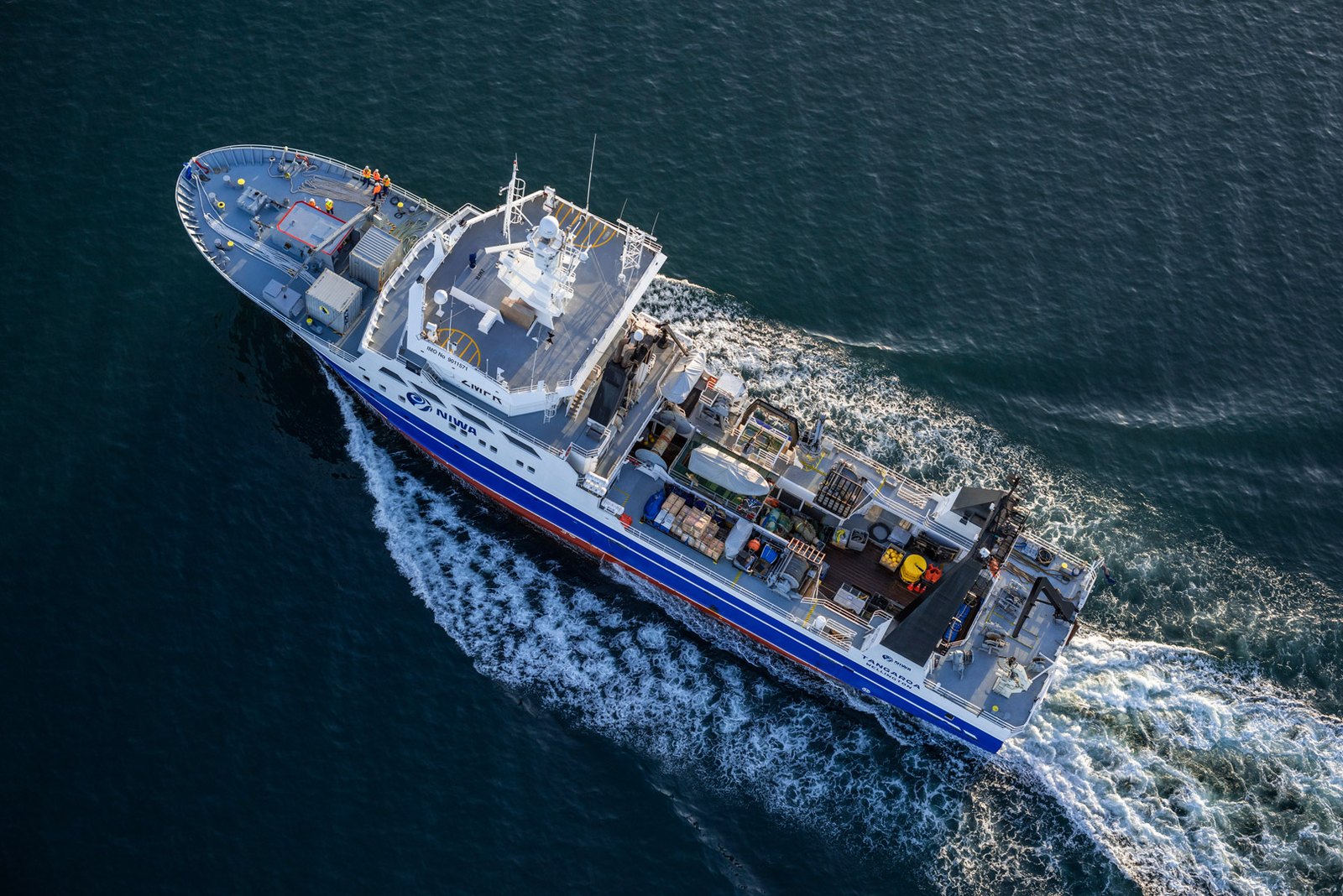
- July 29: Glomar subsidiary UK Seabed Resources left Tahiti aboard the research vessel RV Tangaroa for a 65 day geological and environmental survey of its UK2 license area in the Clarion-Clipperton Zone, run with Earth Sciences New Zealand. The subsidiary’s two license areas cover about 133,000 square kilometers.
- Ahead: the campaign runs into early October.
Eco Minerals (private)
- August 10: the company bought a Kongsberg HUGIN Superior autonomous underwater vehicle, rated to 6,000 meters, through its survey subsidiary Deep Sea Vision.
- August 13: Christopher Bauer was appointed president of Deep Sea Vision, effective August 1, joining from Ballard Marine Construction.
- August 25: Deep Sea Vision signed a contract with Deep Reach Technology of Stafford, Texas, to support a deep-sea environmental impact assessment inside Japan’s exclusive economic zone. The work covers a support vessel, AUV systems, geophysical surveying, and environmental and geotechnical sampling.
American Ocean Minerals (private)
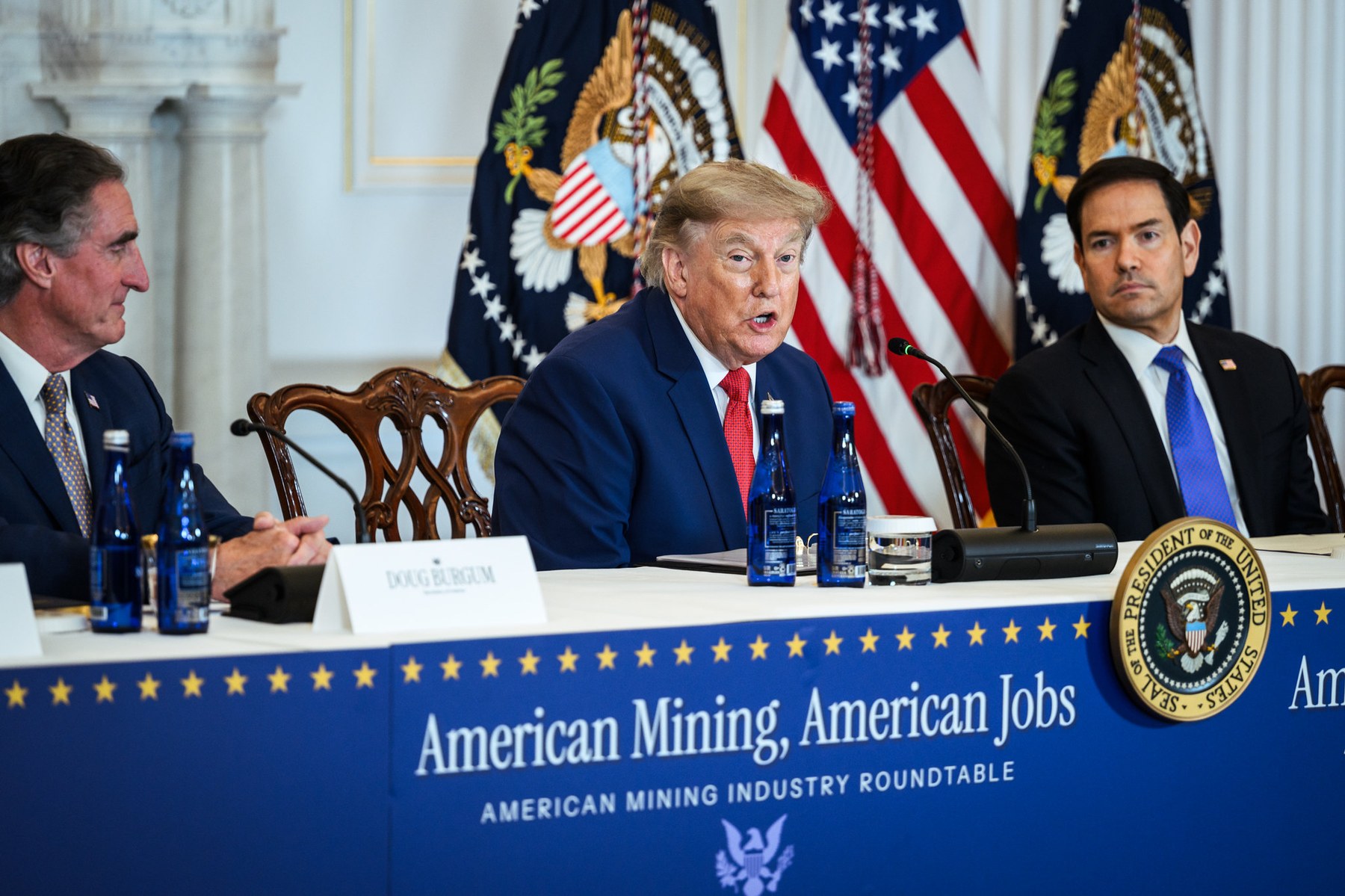
- August 7: Chairman Tom Albanese gave President Trump a solid gold replica of a polymetallic nodule at the American Mining Roundtable, held at the U.S. Department of State.
- August 10: Paul Warme was appointed Chief Financial Officer, after more than 25 years in mining and industrial finance at Rio Tinto, Iluka Resources and BlueScope Steel.

Wetstone and the Cook Islands
- August 22: the Cook Islands Investment Corporation signed a partnership with Wetstone that splits its seabed interests into two ventures. Cobalt Seabed Resources takes the exclusive economic zone, with CIIC keeping 51 percent and Wetstone taking the 49 percent formerly held by Global Sea Mineral Resources. Te Moana Seabed Resources takes the Clarion-Clipperton Zone.
Where the US regulatory process stands
In August the American process moved from agency review to public comment. NOAA’s two Federal Register notices for TMC, on August 17 and 19, opened the environmental review of one application and the comment period on the other. Deep Sea Minerals has a substantial compliance determination and is waiting for the next step.
On August 7 the administration held the American Mining Roundtable at the State Department. The White House put the financing commitments announced there at more than US$2 billion for critical minerals and battery projects, plus more than US$180 million for mining education and workforce development. According to Deep Sea Minerals’ account of the event, President Trump said his administration had authorized deep-sea mining to unlock resources off the U.S. coast.
The Marine Minerals Administration, MMA, published a Proposed Leasing Notice on August 17 for a minerals lease sale offshore the Commonwealth of the Northern Mariana Islands. It is the second island territory the agency has taken this far, after American Samoa, and the Environmental Assessment is complete. The notice appeared in the Federal Register the next day, where the agency is still filed under its statutory name, the Bureau of Ocean Energy Management. The territory’s governor has until October 19 to comment, and the sale is proposed for December 16.
On August 20 the Department of Energy awarded US$500 million to seven critical minerals and battery projects. US$100 million of that went to Jervois, for what Reuters reports would be the only cobalt refinery in the United States. Assistant Secretary Audrey Robertson told Reuters the plant could in time process deep-sea nodules.
Where the ISA stands
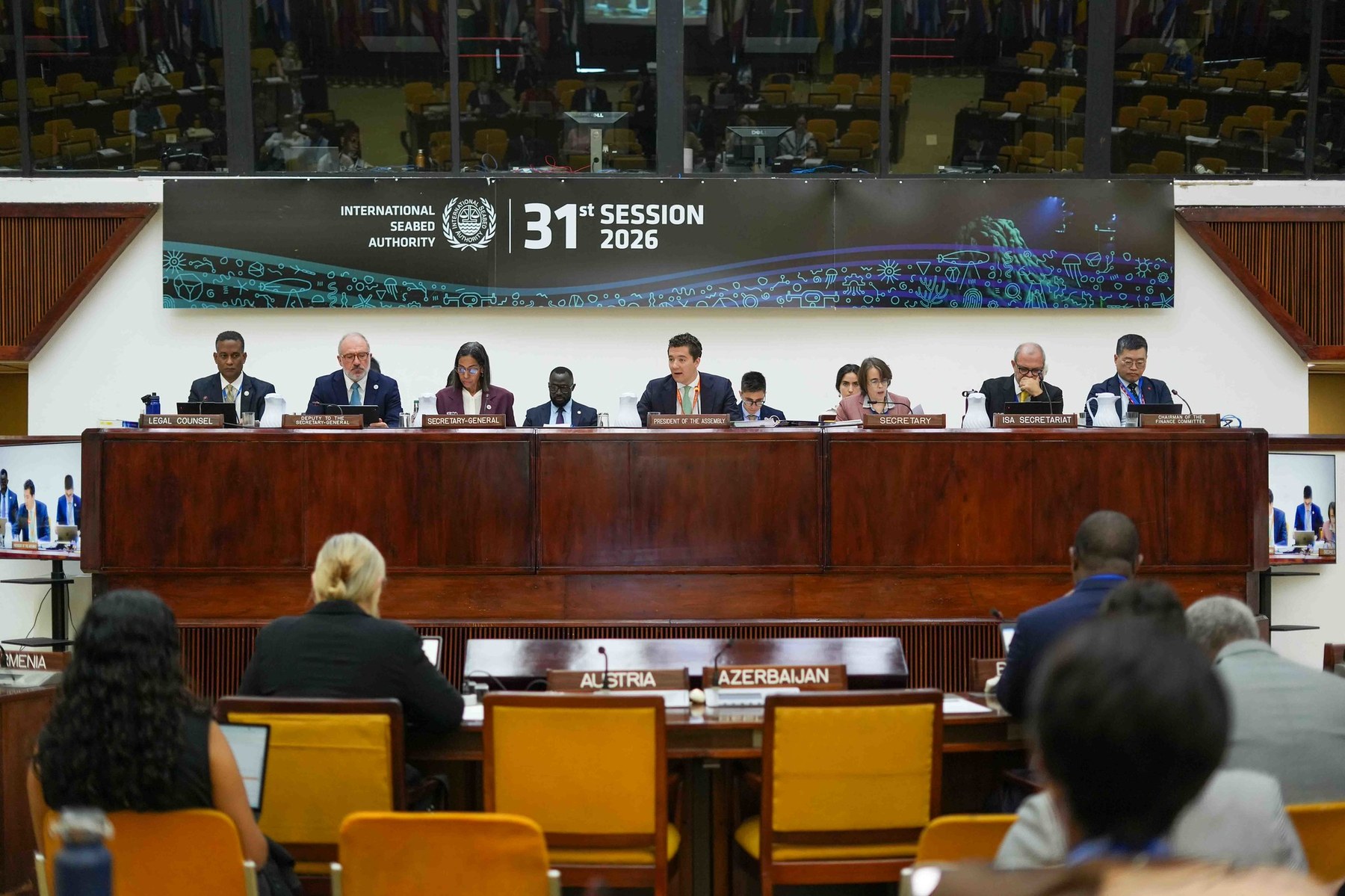
The International Seabed Authority closed its summer sessions at the end of July without adopting the mining code. The next deadline came from the courts. Under the Seabed Disputes Chamber’s orders of July 18, TMC’s subsidiaries NORI and TOML and the ISA itself had to file compliance reports by August 31, and none had been made public by the time of writing. The inquiry behind those orders is still open, and NORI’s exploration contract now runs to July 2031.
The rest of the world
Japan has fixed a date. On July 25 the Cabinet Office and the Japan Agency for Marine-Earth Science and Technology, JAMSTEC, confirmed a full-scale mining test off Minamitorishima for February 2027. The test aims to lift up to 350 tonnes of rare earth bearing mud a day from about 6,000 meters of water, and medium and heavy rare earths make up 54 percent of the rare earth content. Eco Minerals’ survey contract inside Japan’s exclusive economic zone shows that the preparatory work is already going out to contractors.
Norway’s first deep-sea mining license round covers 386 proposed blocks and is ready to be issued, according to Green Minerals’ first half presentation on August 20. WWF’s legal challenge to the decision that opened Norwegian waters is still pending. In Namibia, the Environmental Commissioner issued a three year environmental clearance certificate for the Sandpiper marine phosphate project on August 6. The company said the certificate does not mean mining begins, with monitoring programs and terrestrial permitting still outstanding.
China’s news in the period was industrial rather than regulatory. On July 29 the dredging research center under CCCC unveiled what it describes as the world’s first land-based pilot platform for a complete deep-sea mining system, linking excavation, vertical lifting, sorting and tailings treatment in a closed loop in Shanghai. In Indonesia, PT Timah (IDX: TINS) reported first half net profit above its full year target on tin prices up 57 percent. It then declared an emergency on August 8, after protests in East Belitung in which demonstrators burned a supervision office and looted an ore warehouse.
Scheduled and expected catalysts
- September 15: comments from the Governor of American Samoa due on the proposed lease sale there.
- September 16: comments due on NOAA’s scoping for the USA-B Environmental Impact Statement.
- October 13: NOAA’s virtual public hearing on TMC’s consolidated USA-A application.
- October 19: comments due on the USA-A application, and comments from the Governor of the Northern Mariana Islands due on the proposed lease sale there.
- Early October: UK Seabed Resources’ 65 day Clarion-Clipperton Zone survey concludes.
- Third quarter of 2026: first line commissioning at Mesabi, with first production expected in the fourth.
- Second half of 2026: GoldCoast’s geophysics interpretation and first offshore sampling, and the MMA’s final leasing notices for American Samoa and the Northern Mariana Islands, each due at least 30 days before its sale.
- November 3: U.S. midterm elections.
- November 19: proposed date for the American Samoa lease sale, PACM-1.
- December 16: proposed date for the Northern Mariana Islands lease sale, PACM-2.
- February 2027: Japan’s full-scale mining test off Minamitorishima.
- By the end of the first quarter of 2027: NOAA’s decision on TMC’s commercial recovery permit.