Key points
- Gerard Barron (DeepGreen, now The Metals Company) and architect Bjarke Ingels present the case for mining seafloor polymetallic nodules, which contain nickel, copper, cobalt and manganese, to supply materials for electric vehicle batteries.
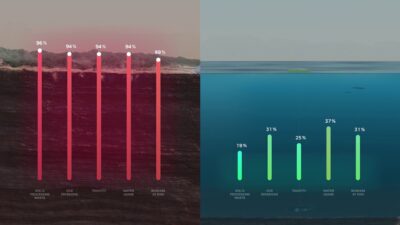
- The companies say sourcing metals from nodules for one billion EV batteries could cut carbon emissions by more than 90% and water use by 90% compared with land-based mining, while producing no solid waste or tailings.
- They cite land-based mining figures for one EV battery’s worth of metal: 13 tons of CO2 emissions, 45,000 liters of water, 64 tons of waste material and 58 tons of toxic material, versus about 6 tons of material disrupted using nodules.
- Bjarke Ingels Group describes the offshore collector and production vessel design, including a photovoltaic roof supplying 7% of the ship’s power, and a shore-based metallurgical plant intended to process nodules with no waste output.