Key points
- NMP closed its job registration drive on 30 November 2020 with 6,058 registrants.
- The company reports a 40 to 60 gender split among those who registered.
- Next steps set out for registrants include informative workshops.
Namibian Marine Phosphate (Pty) Limited (“NMP”) closed its job registration drive on 30th November 2020 with over 6,000 registrants. Thank you to all registrants who made the effort and took the time to register their interest for the jobs expected to be created when the Sandpiper Marine Phosphate Project (“Sandpiper Project”) commences. The next steps for registrants are detailed below along with NMP’s responses to questions raised during the job registration drive by NGOs and the public at large.
Total Registrations
6,058
Gender
40% 60%
Next Steps: Informative Workshops for Registrants
The next steps of the Job Registration Drive are to implement a series of informative workshops to provide registrants with details about the Sandpiper Project’s technical, environmental, and development aspects along with the related job opportunities. All registrants will be contacted directly by NMP in due course with invitations to the workshops in 2021 (subject to Covid-19 restrictions, workshops are anticipated to begin in March 2021). Proposed time frames are set out below:
Registrations
Information
Invitations to
Workshops Commence:
Close:
Collation:
Workshops:
Responding to Questions and Comments from NGOs and the Public at Large
NMP welcomed questions and comments during the Job Registration Drive and takes the opportunity to respond with factual details about the Sandpiper Project.
Why hold the job registration drive during the Covid-19 pandemic?
Anticipating a favourable judgement from the current legal hearing to be delivered in March 2021, NMP took the proactive step to move forward in preparation of the Sandpiper Project development.
NMP has, in fact, only resumed activities which were in progress in 2016 before the legal actions commenced.
Does marine phosphate mining pose a catastrophic risk to the environment & the fishing industry?
No. All evidence and expert opinion from onsite and regional independent specialist studies conclude that the Sandpiper Project will have “no significant impact on the marine environment or the commercial fishing industry” at the proposed scale of operations. Marine phosphate mining operations can co-exist with fishing.

Has an Environmental Impact Assessment (“EIA”) been completed and is it available to the public?
Yes. The EIA concludes that the Sandpiper Project will have “no significant impact on the marine environment or commercial fishing industry”. In accordance with the requirements of the Environmental Management Act (2007), the EIA is available at the office of the Ministry of Environment, Forestry and Tourism, and on the NMP website.
Was the EIA conducted by independent specialists and were the public consulted?
Yes. Internationally-renowned consultants provided the supporting studies for the EIA.
Yes. 18 public and stakeholder consultations were held, all of which were documented.
How many jobs will the Sandpiper Project create?
The Sandpiper Project will employ over 600 Namibians (directly and indirectly) for construction and operations in Walvis Bay.
According to the Chamber of Mines Namibia’s 2019 analysis, for every 1 new job created in the mining industry, 7 additional new jobs are created indirectly in the economy, forecasting that Sandpiper Project will create 4,200 jobs.
NMP would like to thank all job drive registrants for their interest in the Sandpiper Project, and NMP remains fully committed to the responsible commercial, social, sustainable and environmental development of the Sandpiper Project in Namibia for the benefit of all stakeholders.
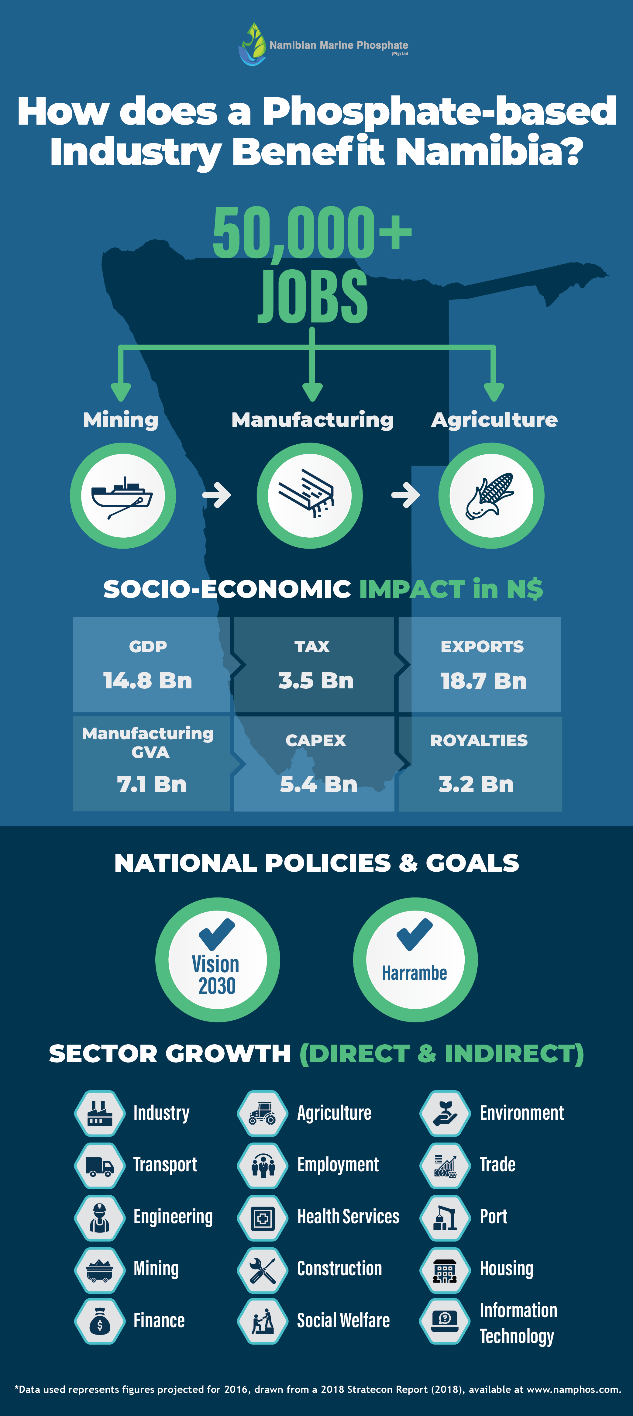
To date, shareholders have invested more than N$780 million into NMP and the Sandpiper Project. The Sandpiper Project could be the first building block for developing a phosphate-based industry in Namibia, which could result in over 50,000 jobs (see infographic attached for more info.)
###