Key points
- DHI Water and Environment modeled the production-scale Eureka III’s seabed sediment discharge at approximately 46 kilograms an hour for BGR.
- GSR’s Patania II, the only nodule collector independently measured in the field, discharged about 43,000 kilograms an hour when observed by the MiningImpact consortium in April and May 2021.
- The Eureka design is meant to leave 30 percent of nodules by mass and more than 60 percent by count undisturbed on the seabed.
- BGR, Germany’s federal geoscience agency, hosts the Clarion-Clipperton Zone trial in its own license area, with independent monitoring now set for 2027 or 2028.
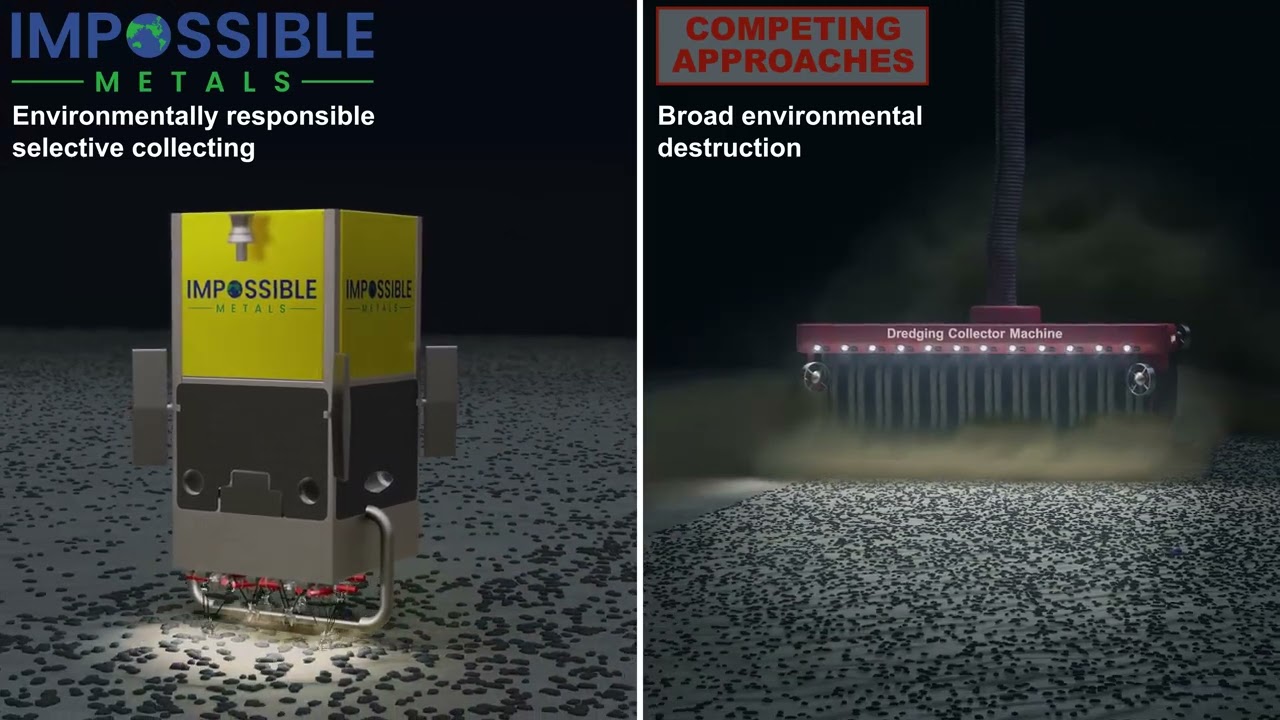
Sediment plumes are the central environmental objection to collecting polymetallic nodules, and conventional systems create two. One forms at the seabed, where a tracked collector drives across the mud and lifts the top layer with the nodules. The other forms midwater, where a surface vessel discharges what it does not want. Impossible Metals’ Eureka system produces neither. It hovers instead of driving, and it has no pipe to the surface.
Modeling prepared for a German federal environmental impact statement puts the seabed sediment discharge of the production-scale Eureka III collector at approximately 46 kilograms an hour. DHI Water and Environment produced it in October 2024 for BGR, Germany’s Federal Institute for Geosciences and Natural Resources. Chief executive Oliver Gunasekara cited the figure in written testimony to the House Natural Resources oversight subcommittee on April 29, 2025, describing technology that “minimizes sediment disturbance and has no sediment plume because of the selective harvesting approach.”
Who BGR is, and why it matters here
BGR is the German government’s geoscience agency, the federal body that advises Berlin on raw materials and runs the country’s marine minerals research. It is also an International Seabed Authority contractor in its own right, holding Germany’s exploration license for polymetallic nodules in the Clarion-Clipperton Zone.
That makes it more than a client for the modeling. The trial runs inside BGR’s license area, and BGR, not Impossible Metals, plans and runs the monitoring around it from a separate vessel. The ISA requires an environmental impact statement a year before any such test, and the DHI model is an appendix to BGR’s.
What the design removes
- At the seabed: the vehicle never touches bottom. A buoyancy engine holds it positively buoyant, so its vertical thrusters push upward rather than down into the mud, and robotic arms pick nodules one at a time.
- In the water column: there is no riser and no separation on deck, so there is nothing to discharge back down. The vehicle fills a hopper on the seabed, becomes buoyant, ascends, and offloads to a transport ship. The 2024 ESG report lists “no return water/mid-water plume” among the architecture’s advantages.
- At the surface: dropping the riser also drops the dynamically positioned production vessel it requires, and with it a large share of the operation’s underwater noise.
On the midwater plume the claim is structural rather than a matter of tuning, because the discharge source does not exist in the design. What hovering cannot remove is redeposition. Sediment lifted when an arm closes on a nodule still settles somewhere.
The numbers, next to a measured one
The 46 kilograms an hour is easier to judge against a collector that has actually been monitored. GSR ran its Patania II pre-prototype in the Clarion-Clipperton Zone in April and May 2021 under independent observation by the MiningImpact consortium of scientists, and Gazis and colleagues published the measurements in Nature Communications in 2025.
- Patania II discharge, measured: 12 plus or minus 3 kilograms a second, about 43,000 kilograms an hour, released 2.5 to 3.2 meters above the seafloor.
- Eureka III discharge, modeled: approximately 46 kilograms an hour. About a thousand times less.
- Patania II redeposition, measured: about 3 centimeters near the mining lanes, with nodules completely buried within 100 meters.
- Eureka III redeposition, modeled: 0.24 to 0.25 millimeters across the trial area. About a hundred times less.
The two pairs are not measured the same way, and the Eureka figures are models rather than measurements, but the order of magnitude is the point.
What the machine leaves behind
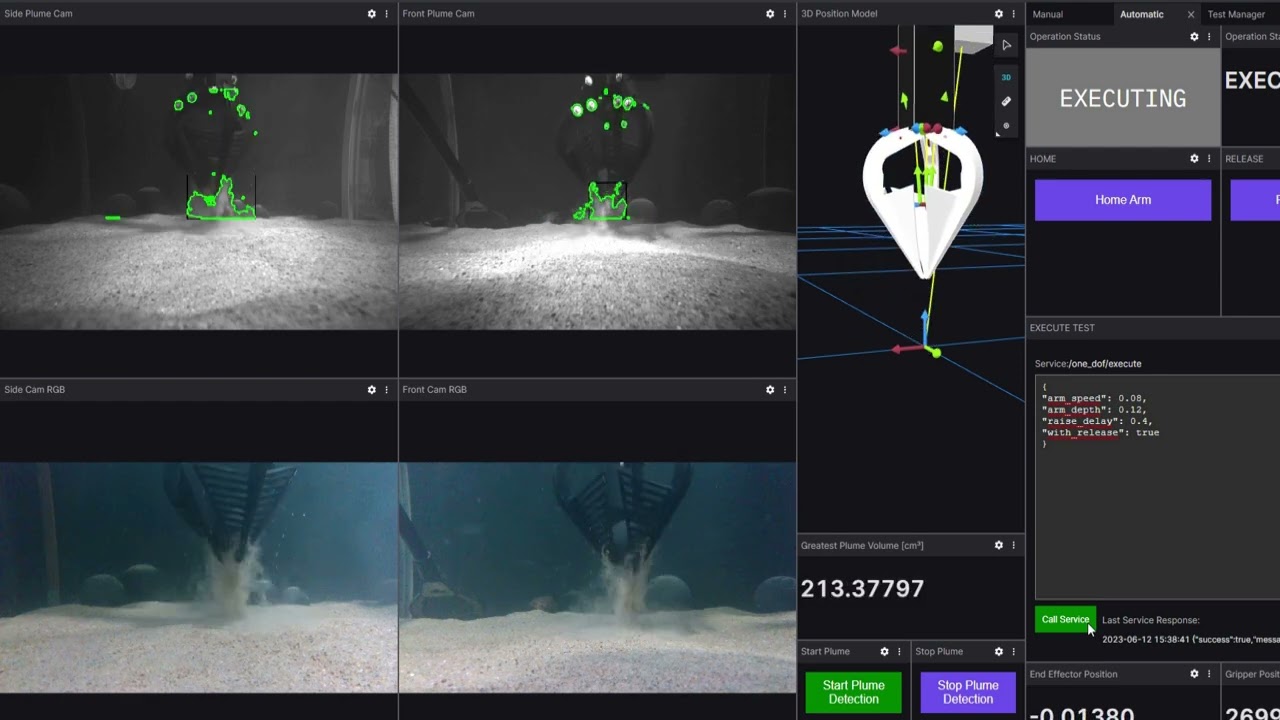
Selectivity is the other half of the design. Image sensing is meant to spot nodules carrying visible life and leave them alone. The economic model assumes 30 percent of nodules stay undisturbed by mass, which is more than 60 percent by count, because the vehicle takes the larger ones. Nodules are the only hard surface on an abyssal mud plain, so leaving most of them preserves what corals and sponges attach to. Critics note that the larger nodules carry the most life, so the mass-based split takes the most populated ones first.
What the long-term record shows
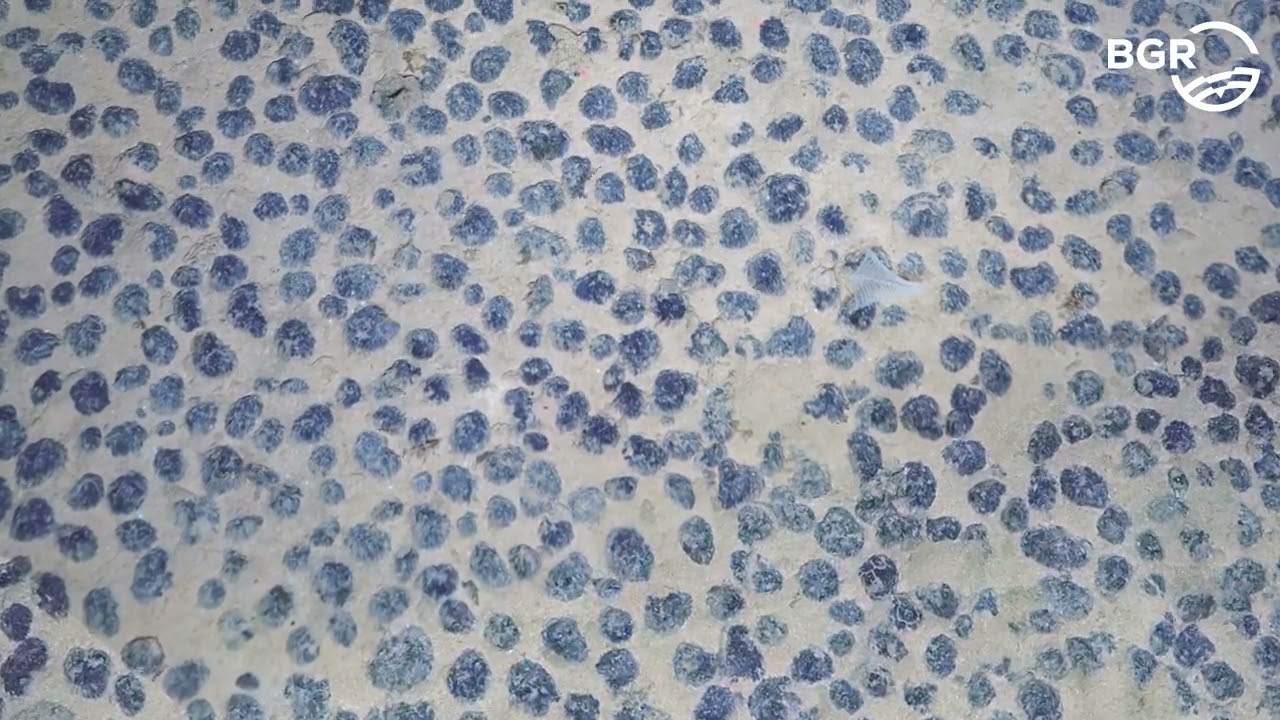
The best evidence on recovery comes from a track cut in the Clarion-Clipperton Zone in 1979 and revisited 44 years later by Jones and colleagues, published in Nature in March 2025.
- Still visible: the furrows, 0.2 to 0.8 meters deep, essentially as they were.
- Still depleted: large-animal density on the tracks below 0.1 per square meter against 0.33 in undisturbed ground, and 35 taxa from three phyla against 76 taxa from nine phyla outside.
- Recovering: the first recorded recolonization in a mined area, by xenophyophores, large single-celled organisms common in the zone, at around eight per square meter.
- Broadly normal: bacterial biomass, and the density of animals living within the sediment, similar inside and outside the tracks.
That track was cut by a machine that stripped the seabed rather than by arms picking nodules individually, so it marks an outer bound on impact rather than a forecast for selective collection.
Where the validation stands
Impossible Metals has been open about what the figure does not yet prove. Its 2024 ESG report writes down two points of consensus from a November 2024 demonstration attended by ISA and Greenpeace representatives: that the modeling assumptions carry high uncertainty and need field testing, and that any comparison should model a fleet, because a fleet is how the system matches one conventional collector’s output. The company’s own model treats Eureka III as a fleet producing 2.25 million tonnes a year.
Environmental groups read the same tables differently. The Deep Sea Mining Campaign, in a June 2025 briefing, sets the modeled 0.25 millimeter layer against natural sedimentation of 0.002 to 0.0115 millimeters a year and calls it thousands of times background. The company answers that this ignores benthic storms and seismic activity, which move far more sediment than the background rate implies.
Who is working with Impossible Metals
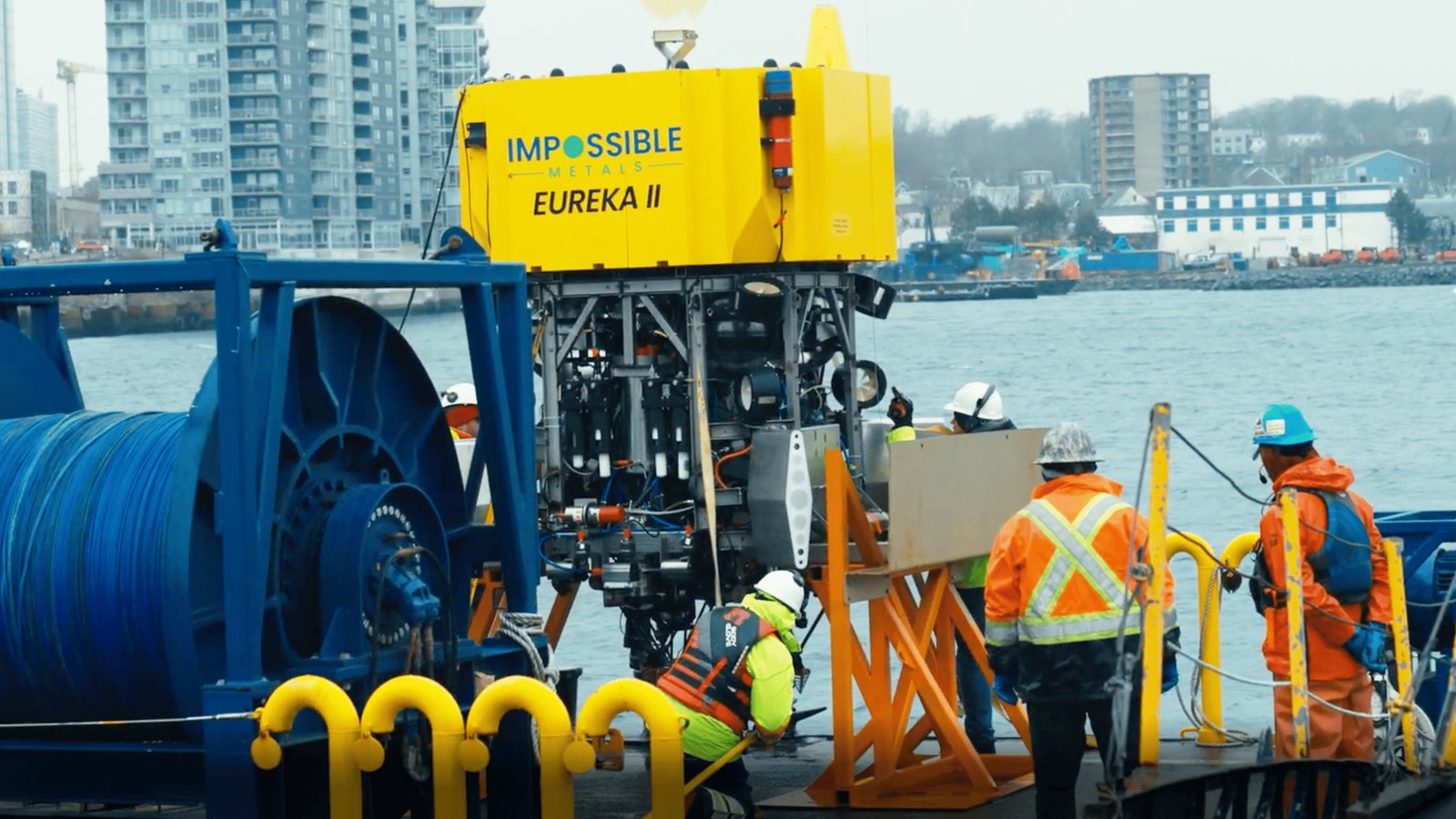
- BGR, Germany. Hosts the Clarion-Clipperton Zone test inside its own license area and runs the environmental monitoring around it.
- The Kingdom of Bahrain. Sponsored Impossible Metals Bahrain’s application to the International Seabed Authority for a nodule exploration license in the zone, announced September 9, 2025.
- Deep Sea Minerals Corp. (CSE: SEAS). Memorandum of understanding in July 2026 to evaluate deploying the riserless system in its prospective license areas, extending to test mining, environmental monitoring and pilot production planning.
- Aqua Metals (Nasdaq: AQMS). MOU on September 16, 2025 to evaluate refining nodule metals through its AquaRefining process.
- ReElement Technologies. Announced July 21, 2025 as the first U.S. deep sea nodule refinement program. Neither company has mentioned nodules in a release since August 2025.
What to watch
- 2027 or 2028: the Eureka III test in the eastern BGR contract area. Four days of collection across two modes, one taking 90 percent of nodules and one 50 percent. It was set for early 2026 before being postponed for development time.
- The American Samoa lease sale. The Marine Minerals Administration issued a proposed leasing notice in July 2026, with a final notice due at least 30 days before any sale. Impossible Metals was the first company to request a critical minerals lease under the Outer Continental Shelf Lands Act, in April 2025.
- The exploration application filed with the International Seabed Authority under Bahrain’s sponsorship.
- Whether measured plume data, when it arrives, lands near 46 kilograms an hour.
Nodule collection has been argued for a decade on the assumption that a plume is the price of the metal. The Eureka design treats that as an engineering problem, and on the midwater half the answer is already built in. The seabed half now has a test date and an independent agency to run it.