
Key points
- GoldCoast Resource Corp. (CSE: GCR) is going public holding ten offshore reconnaissance licenses over about 10,000 square kilometers of Ghana’s continental shelf, roughly 53 percent of the country’s offshore coastline.
- Second half of 2026: marine geophysics and bathymetric mapping to turn magnetic anomalies into targets, followed by seafloor coring and grab sampling.
- 2028: the company’s target for starting near-shore contract dredging.
GoldCoast Resource Corp. (CSE: GCR) is about to go public holding ten offshore reconnaissance licenses over roughly 10,000 square kilometers of Ghana’s continental shelf. That is about 53 percent of the country’s offshore coastline, and no other company holds ground like it. Its chairman and largest shareholder is Sir Samuel Esson Jonah, who built Ashanti Goldfields into an international gold producer.
- Jonah holds 17,743,012 shares, 25.6 percent of the 69,300,403 outstanding. Directors and officers hold 56.17 percent between them.
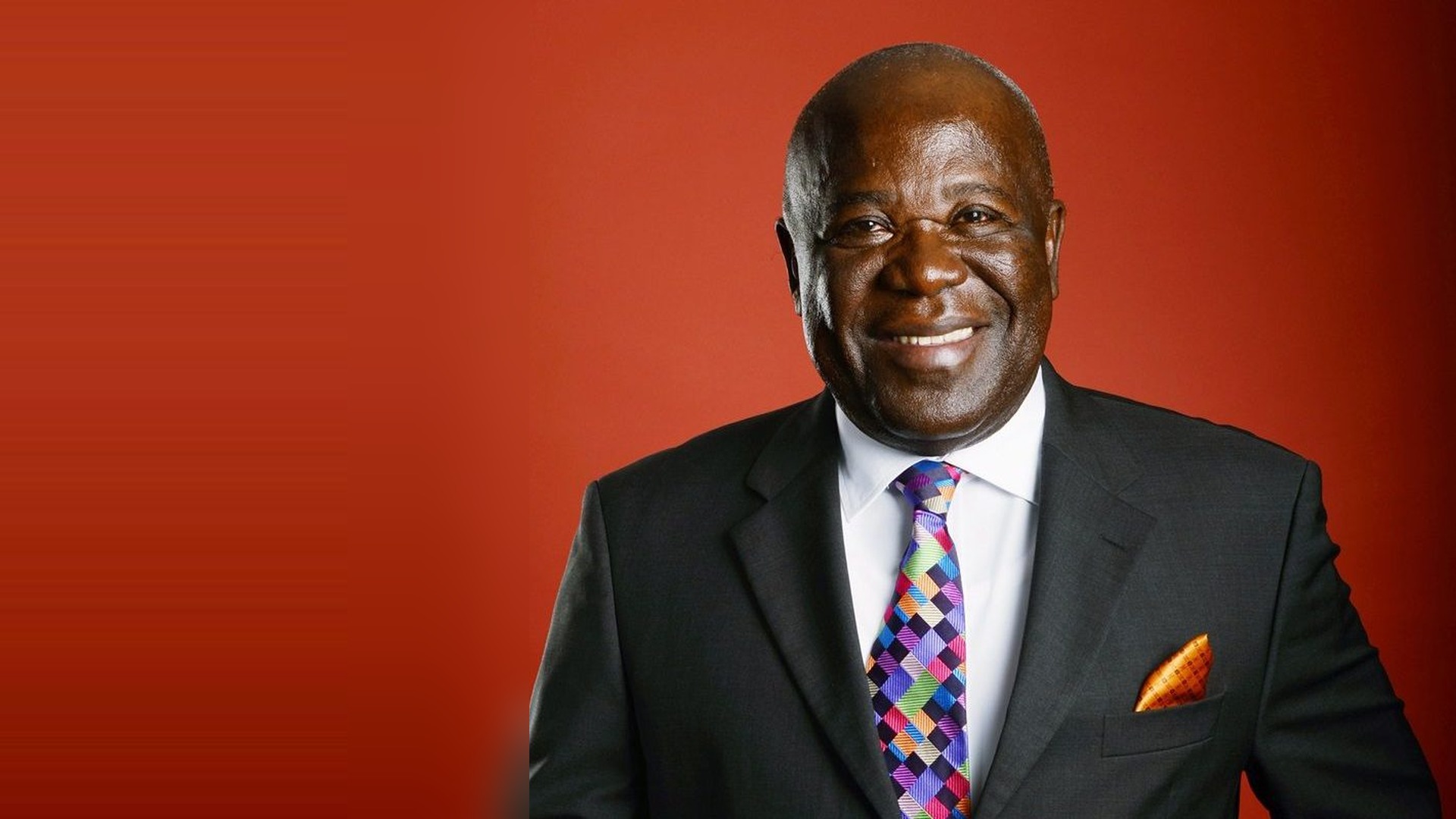
The chairman
Jonah is one of the most accomplished mining executives Ghana has produced. He was born in Obuasi, the gold town Ashanti was built around. He trained as a mining engineer at the Camborne School of Mines, took a master’s in mine management at Imperial College London, and went home to run the company that owned the mine.
- He joined Ashanti Goldfields in 1979 and became chief executive in 1986. Annual production grew from about 240,000 ounces of gold to more than 1.6 million under him, and a single mine became a multinational.
- In 1996 he took Ashanti onto the New York Stock Exchange. It was the first operating African company to list there, alongside London and Accra.
- Ashanti merged into AngloGold in April 2004. The deal valued each Ashanti share at US$12.46, about US$1.7 billion in total, and Jonah became Executive President of AngloGold Ashanti (NYSE: AU), then the world’s second largest gold producer and today worth US$41 billion. That December, CNN and Time named him one of the 25 most influential business people in the world.
- Queen Elizabeth II made him a Knight Commander of the Order of the British Empire in 2003, the first Ghanaian knighted in the 21st century. Ghana named him a Companion of the Order of the Star of Ghana in 2006. He is a foreign member of the United States National Academy of Engineering and holds honorary doctorates from the Camborne School of Mines and the University of Exeter, Ashesi University and Imperial College London.
- He has run Jonah Capital in Johannesburg since 2007. He sat on the board of Vodafone Group plc (LSE: VOD, £27.5 billion) from 2009 to 2019, on Bank of America’s (NYSE: BAC) global advisory council from 2012 to 2020, and on the boards of Standard Bank Group (JSE: SBK, R531 billion) and Moto Gold Mines. He has chaired Helios Towers plc (LSE: HTWS, £2.1 billion) since 2019.
- He has kept working in exploration. He chaired Roscan Gold (TSXV: ROS, C$66 million) in Mali from 2020 to 2024, and has chaired Avanti Gold Corp. (CSE: AGC, C$88 million) since May 2024.
Standing in Ghana
Jonah’s influence in Ghana extends well beyond mining. Successive governments, drawn from both of the country’s major parties, have appointed him to advise them on the economy.
- In January 2026, President John Dramani Mahama named him to a twelve-member Presidential Advisory Group on the Economy, which was inaugurated the following month. It advises the government on economic management, fiscal policy and long-term growth. The President chairs it. The other members include the Vice President, two former governors of the Bank of Ghana, a former finance minister and the chief executive of the Ghana Stock Exchange. Jonah is its industrialist.
- He served earlier on President John Kufuor’s Ghana Investors’ Advisory Council, which advised the government on attracting foreign capital. It was Kufuor’s government that made him a Companion of the Order of the Star of Ghana.
- He is Chancellor of the University of Cape Coast, a public university. He is also a visiting professor at the Wits Business School in Johannesburg and a trustee of the Nelson Mandela Legacy Trust.
Why local ownership decides Ghanaian gold projects now
Over the past two years Ghana has rewritten the rules on who may own and profit from its gold. Every change has pushed the same way. A project without a credible Ghanaian owner now starts at a disadvantage.
- The Ghana Gold Board Act of 2025 made GoldBod the sole buyer, assayer and exporter of gold from the artisanal and small-scale sector. Foreigners were ordered out of the local gold trading market by April 30, 2025. They can still buy through GoldBod, but not inside the domestic market.
- The 2020 local content regulations require core surface mining work, meaning blasting, loading, hauling and dumping, to be done by wholly Ghanaian-owned companies. Underground work requires at least 50 percent local equity. A mineral right holder can also be required to list at least 20 percent of its equity on the Ghana Stock Exchange within five years of starting production.
- GoldCoast’s Ghanaian subsidiary is 10 percent owned by its own chairman, who advises the President on the economy. The local ownership was built in from the start rather than added later to satisfy a rule.
The ground
- Ghana’s Minerals Commission granted GoldCoast ten contiguous offshore blocks on February 9, 2026. They run about 300 kilometers of coast, from Half Assini east to Winneba, and reach roughly 33 kilometers offshore. The term is one year, to February 8, 2027.
- On the grant, Jonah thanked “the Government of Ghana and the Minerals Commission for their constructive engagement.” He holds 10 percent of GoldCoast GRC Ghana Ltd. in his own name, which makes him the Ghanaian partner in the licensed subsidiary as well as chairman of the parent.
- Ghana is Africa’s largest gold producer, at roughly 4 to 5 million ounces a year. Gold generated about US$11.2 billion of exports in 2025, according to the Ghana Gold Board.
The investment case
Three gold-bearing rivers, the Pra, Ankobra and Tano, drain Ghana’s Birimian and Tarkwaian gold belts onto a shallow, gently sloping shelf. Sea levels fell as much as 120 meters during the ice ages, and rivers cut channels across ground that is now seabed. Gold settled in those channels and in the beach sands that later drowned.
- Dr. Robert Griffis, GoldCoast’s exploration head and senior author of The Gold Deposits of Ghana, estimates the gold eroded off southwest Ghana and carried out to sea is “likely in the order of approximately 200 million ounces.” That is a geological inference, not a resource estimate.
- Nobody has systematically explored this shelf for anything but oil and gas.
- Preliminary sampling along the coast averaged 0.44 grams of gold per cubic meter across 30 samples, and 0.535 g/m3 in beach sands. The projected cutoff is 0.08 g/m3 at a US$3,000 gold price.
- The airborne magnetic survey was 98.6 percent complete as of June 22, 2026, with 43,708 line kilometers flown out of Takoradi. Marine geophysics and seafloor sampling come next.
- This is dredging, not deep-sea mining. Production is targeted in 10 to 20 meters of water, and the mineralized material is expected in the top 2 to 3 meters of seabed. Recovery is gravity only, with no blasting, no cyanide, no tailings dam and no land clearing.
- The model works elsewhere. Debmarine Namibia has dredged diamonds off Namibia for more than 20 years with seven vessels. The UK Crown Estate has run marine aggregate dredging for over 50 years. PT Timah (IDX: TINS, US$1.5 billion) has mined tin offshore Indonesia for a century.
- Dredge vessels can be hired instead of built, which removes the longest item from the schedule. GoldCoast targets first production within about 24 months. A conventional greenfield gold project takes 10 to 15 years.
What to watch
- Mid-August 2026: the expected first trading day under the symbol GCR.
- Second half of 2026: marine geophysics and bathymetric mapping to turn magnetic anomalies into targets, followed by seafloor coring and grab sampling.
- 2028: the company’s target for starting near-shore contract dredging.
More on GoldCoast at goldcoastresource.com and in its corporate presentation.

