Key points
- DOE awarded $500 million to seven critical minerals and battery projects on August 20, 2026.
- Jervois receives $100 million to build what Reuters reports would be the only US cobalt refinery.
- Assistant Secretary Audrey Robertson told Reuters the plant could in time process deep-sea nodules.
- No nodule developer was among the seven selections.
The U.S. Department of Energy, DOE, announced $500 million for seven critical minerals and battery projects on August 20, 2026, and $100 million of it goes to Jervois to build a commercial cobalt refinery. Audrey Robertson, the assistant secretary who runs DOE’s Office of Critical Minerals and Energy Innovation, told Reuters that the plant could in time process deep-sea nodules.
The nodule reference is not in DOE’s written announcement, which does not mention nodules, the seafloor or ocean minerals anywhere. It came from Robertson in remarks to Reuters reporters Ernest Scheyder and Jarrett Renshaw. Read plainly it describes what the plant might take in years to come, not work the grant pays for. What gives it weight is the product the refinery is designed to make.
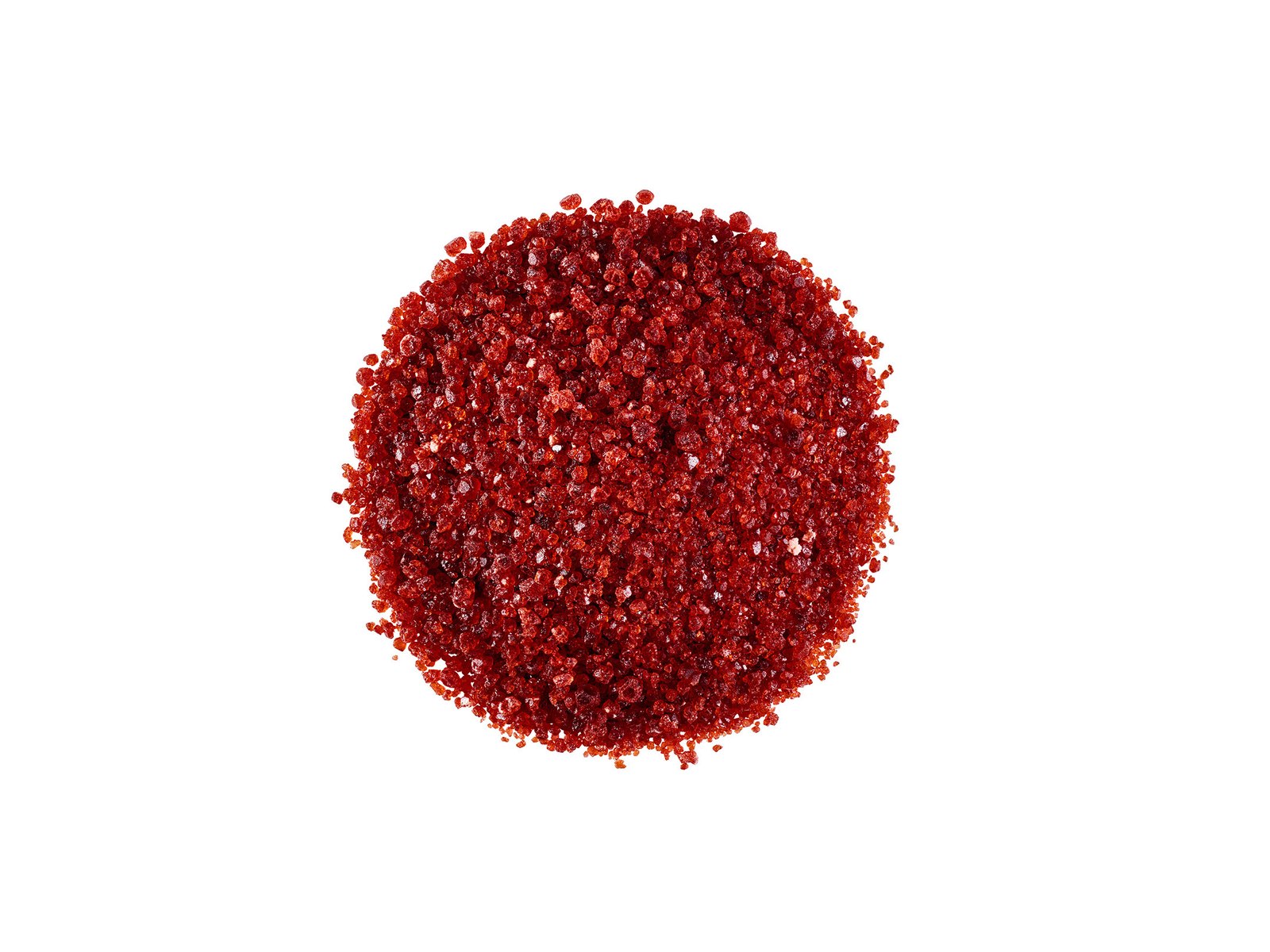
DOE’s own project description says the Jervois plant will produce battery-grade cobalt sulfate, the salt that goes into battery cathodes, at an industrial site still to be chosen, and that the design rests on a completed feasibility study. Cobalt sulfate is also what a nodule circuit yields. On June 12, 2024, TMC (Nasdaq: TMC) and SGS Canada announced the first cobalt sulfate produced solely from seafloor polymetallic nodules, in bench-scale testing at SGS’s Lakefield, Ontario laboratory. It was made from nickel-copper-cobalt matte, the metal-rich intermediate that comes out of a smelter, which is the form TMC expects to ship nodule metal in once it has been through a furnace. A refinery that takes matte and finishes it into sulfate is the back half of that chain. The smelting step in front of it is not part of the Jervois award.
The money is the third round of DOE’s Battery Materials Processing and Battery Manufacturing and Recycling grant programs, both funded by the 2021 infrastructure law. DOE issued the funding notice on March 13, 2026, closed full applications on April 24 and announced selections on August 20. It received hundreds of applications, according to Reuters.
Alongside Jervois, Lilac Solutions receives $100 million for a lithium plant on the northeastern shore of the Great Salt Lake in Utah, and Nth Cycle $100 million for a plant in the southeastern United States that will refine black mass, the metal-rich powder left when spent lithium-ion batteries are shredded. Princeton NuEnergy in Commerce, Georgia, Arcanum Ventures on the Gulf Coast, Coreshell Technologies in San Leandro, California, and Elevated Materials each receive $50 million.
Jervois controls the Idaho Cobalt Operations near Salmon, Idaho, which it idled in 2023 weeks before the mine was due to open. Millstreet Capital Management took the company through a pre-packaged Chapter 11 in early 2025, wiping out its shareholders, and it emerged in May 2025 as a privately held US-controlled group. It already runs a cobalt refinery at Kokkola in Finland and is refurbishing the São Miguel Paulista nickel and cobalt refinery in Brazil for a restart in 2027. Reuters reported that the US plant would be the country’s only cobalt refinery.
Why it matters
Every US nodule developer has tied its onshore plans to federal money. TMC told investors on August 13, 2026 that it is engaged in funding processes with several US agencies named in Executive Order 14285, the April 2025 order on offshore critical minerals, and that it does not intend to raise capital in the markets until those processes conclude. Chairman and chief executive Gerard Barron said the company’s domestic capital spending is contingent on a majority of the funding coming from US government sources. TMC signed a master services agreement with Mariana Minerals on July 21, 2026 to advance a nodule processing and refining park at the Port of Brownsville, Texas.
Glomar Minerals and Cobalt Blue Holdings (ASX: COB) are running the other US nodule refining effort. Their Project Infinity narrowed to four finalist sites in Louisiana, North Carolina and Texas on June 15, 2026, for a plant designed to refine 200,000 tons of nodules and 7,500 tons of land-mined cobalt hydroxide a year.
Neither was among the seven selections. The federal award that came closest to nodule processing on August 20 went to a refinery built around land-based cobalt, with the seabed named only as something it might handle later.
Background
Executive Order 14285, signed April 24, 2025, directed federal agencies to increase investment in the technologies used to collect and process seabed minerals. The FY25 National Defense Authorization Act, signed December 23, 2024, separately required the Defense Department’s Industrial Base Policy Office to study the feasibility of refining nodule-derived intermediates into high-purity nickel, copper and cobalt. Neither has yet produced a funded plant on US soil.
What to watch
- The Jervois site. DOE lists the refinery’s location as still to be determined, so no state has been named.
- NOAA’s review of TMC USA’s applications. The agency published the consolidated USA-A exploration license and commercial recovery permit application in the Federal Register on August 19, 2026, and on August 17 published a notice of intent to prepare an environmental impact statement for the USA-B exploration license application.
- TMC’s federal funding processes, which the company says are running confidentially with several agencies and which it has tied to any decision to build at Brownsville.
- Project Infinity’s site choice, now in detailed cost and engineering study across the four finalist locations.