Key points
- The High Court judgment on the challenge to NMP’s mining licence was postponed from 8 March to 12 April 2021.
- NMP cites analyst forecasts of positive mineral market growth from 2020 to 2030.
- The company links growing phosphate demand to the expansion of electric vehicles.
The delivery of the Judgement in the application launched by the Confederation of Namibian Fishing Association (and 3 other parties), challenging the legitimacy of Namibian Marine Phosphate (Pty) Limited (“NMP”)’s Mining Licence (“ML170”), has been postponed from 8th March 2021 to 12th April 2021 by the Namibian High Court.
Minerals Market Set to See Positive Growth
While the world focuses on alleviating the deep human-and- economic impacts of the Covid-19 pandemic, analysts forecast that the mineral market is likely to see positive growth in the short to medium term (2020-2030), which is, in part, due to increased consumer awareness around climate change.i
Phosphate Demand to Grow by 2030
In February 2021, phosphate prices have recovered by upwards of 20%, well above the pre-Covid levels.ii By 2030, the demand for phosphate is forecasted to grow 13x, becoming the 3rd highest increased-in-demand metal required for the production of Lithium Ferrophosphate batteries (“LFP Batteries”) in Electric Vehicles (“EV”).iii
Namibia Positioned to be a Major Phosphate Producer
With one of the world’s largest undeveloped phosphate resources, establishing a Phosphate-based Industry could position Namibia to meet the future global demand for Phosphate to fuel the EV battery market. NMP would be only one company within a new Phosphate-based industry, and this new Industry (i.e., mining & associated industries) has the potential to contribute up to 9% to Namibia’s GDP and create over 50,000 direct, indirect, induced jobs.iv
According to the Chamber of Mines of Namibia, the size of Namibia’s phosphate resource “can support sustainable mining and related industries for more than 100 years, thus benefiting future generations.”v Environmentally, phosphate marine dredge-mining has a low impact, and a BCMLE 2008 study provides evidence, from repeated monitoring studies over a 10-year period, that the seabed does recover after seabed dredge-mining.vi
Why is Phosphate Essential for the Electric Vehicle Market?
Image: Source
The shift from coal-and-gas power to wind-and-solar power, in combination with the shift from combustion vehicles to EVs, is driving the new demand for minerals, particularly copper, nickel, and cobalt.
Phosphate is a key component in LFP Batteries, which are required for Electric Vehicles. The use of phosphates is also expected to lessen the use of cobalt and, therefore, reduce both the cost and environmental concerns of LFP batteries.vii
According to estimates, EVs are expected to make up over half of all passenger vehicle sales by 2040 with many governments committing to support the production of EVs in a bid to decrease their dependency on oil and gas. The largest minerals importer, China, has, for example, set a goal by 2025 whereby EVs are to make up 20% of new car sales.viii
NMP is in the process of studying the LFP battery market to understand if, along with other applications NMP has already identified for the Namphos Concentrate (i.e., direct application, single super Phosphate, and blend for phosphoric acid production), there is a position for the Namphos Concentrate in the LFP battery market.
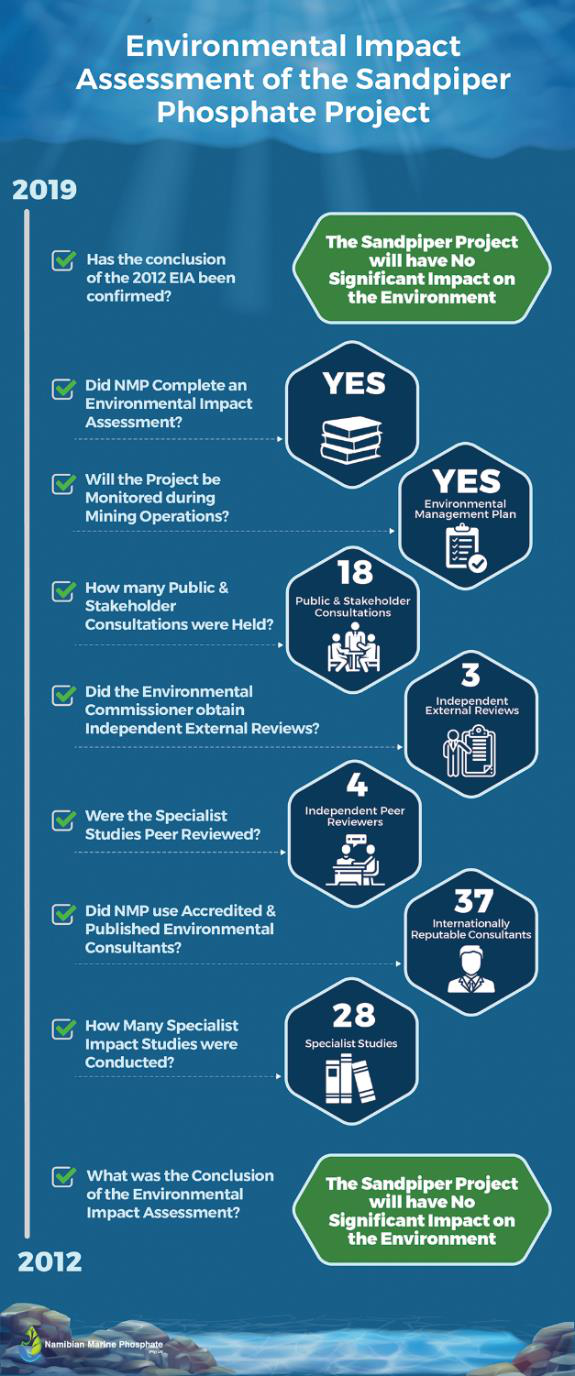
Image: Source. Full size on p.3
Studies & Scientists Support Positive Impact for Namibia’s Economy and Environment
Economic Benefits:
Environmentalist Dr. Chris Brown, CEO of Namibia’s Chamber of Environment, stated in an interview (October 2020) with the Chamber of Mines about a phosphate marine mining industry that:
“I have absolute confidence that we’re onto a good new stream of income for Namibia, that will make a great difference to the economy of the country, to job creation, and at really minimal risk to the environment and to the fishing sector of the country.”ix
Environmental Impact:
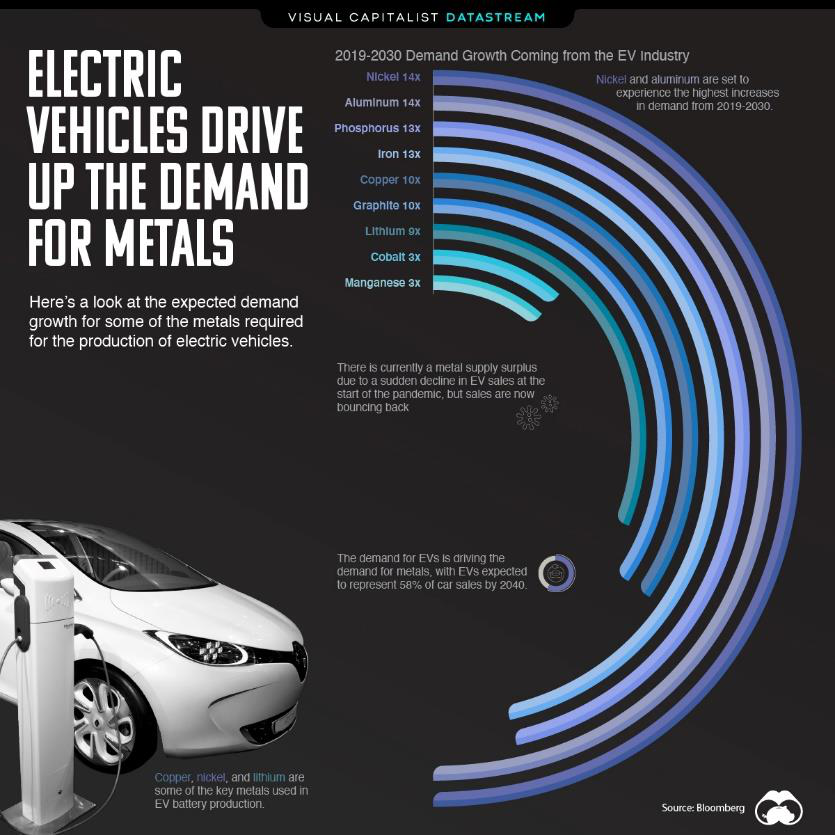
The environmental work carried out by NMP has been described as “some of the best environmental work in the Benguela Current System,” which has been put together by internationally reputable consultants all independent of NMP.
Supporting Namibia’s mandate to protect the ocean, NMP enlisted internationally renowned scientists to conduct 28 studies, costing over N$28.7 million, and ensured all the experts have worked in some capacity on the Benguela Coastal System.
Referring to NMP’s EIA, according to Dr. Chris Brown:
“This has been one of the most extensive environmental impact assessments ever undertaken in Namibia. A number of specialist studies have taken place, in depth specialist studies, and there has been further follow-up work on some of these studies to enrich the data sets behind them. Once the specialist studies had been done, the whole report with the specialist studies within, were sent to independent external people to have a look at it and comment on the quality of the work. Now I’ve spent more than a week studying the EIA report and the specialist studies; that’s a huge volume of work – goes to well over a thousand pages.”x
Independent scientists and specialists have concluded that at the proposed scale of operations:
- NMP’s Sandpiper Marine Phosphate Project will have no significant impact on the marine environment,
- marine-based industries can co-exist (i.e., fishing, diamonds, and phosphate), and
- phosphate mining will not kill the fishing industry. ### NMP Management More information is available at NMP’s website and Facebook
Image: https://www.visualcapitalist.com/electric-vehicles-drive-up-metals-demand/
i (2020, November). Metals & Mining: Is There Enough Copper for the Green Wave? Jefferies. https://www.jefferies.com/IdeasAndPerspectives/2/2776 ii https://www.indexmundi.com/commodities/?commodity=rock-phosphate&months=60 iii https://www.visualcapitalist.com/electric-vehicles-drive-up-metals-demand/ iv https://chamberofmines.org.na/benefits-phosphate-based-industry-namibia/ v https://chamberofmines.org.na/phosphate-based-industry-contribution-namibia-development-policies/ vi http://www.namphos.com/environment/bclme-2008-namibia-seabed-mining-report.html vii https://en.wikipedia.org/wiki/Lithium_iron_phosphate_battery viii https://www.visualcapitalist.com/electric-vehicles-drive-up-metals-demand/ ix https://chamberofmines.org.na/phosphate-mining-and-marine-environment/ x https://chamberofmines.org.na/phosphate-mining-and-marine-environment/