Key points
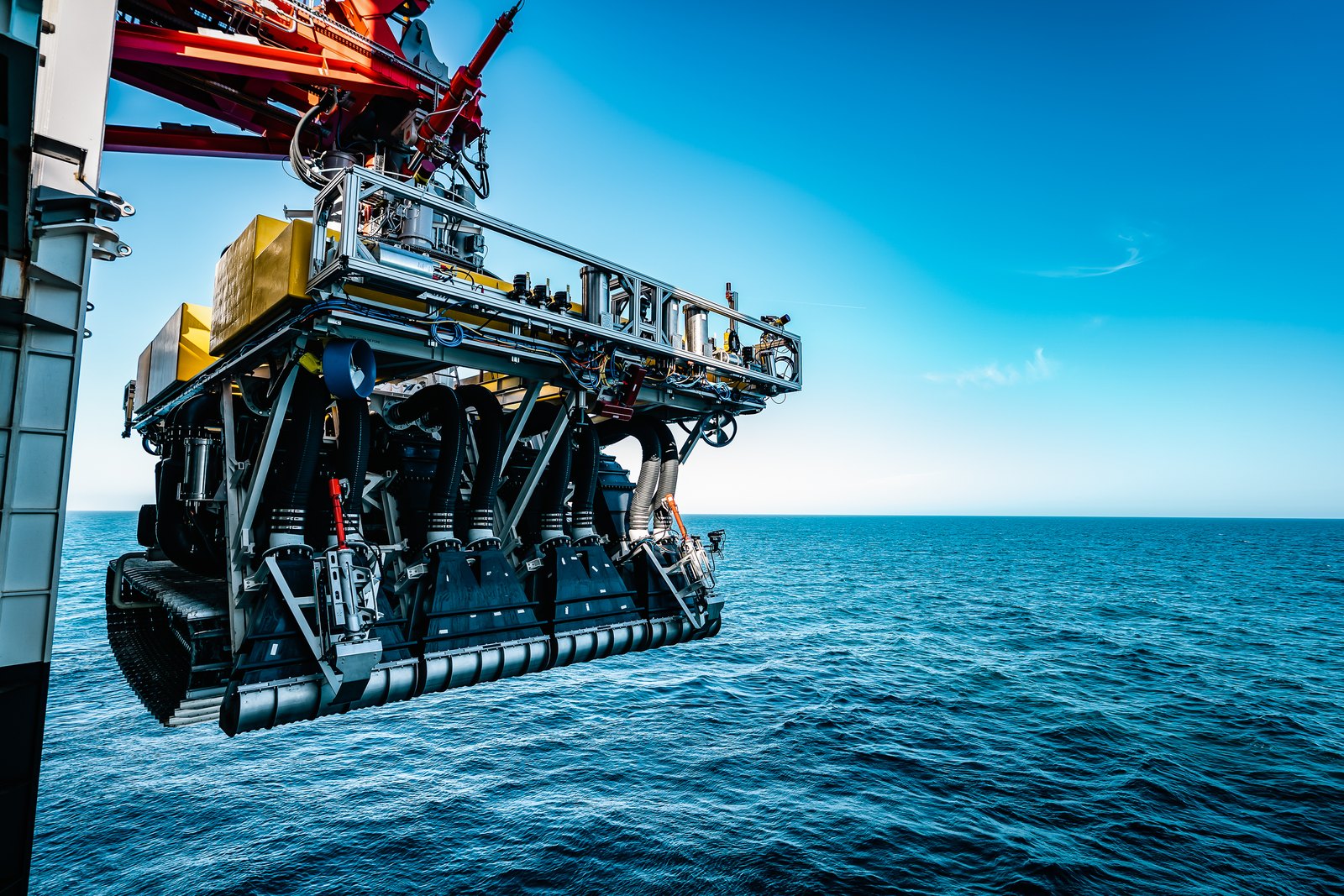
- TMC and Allseas announced March 22, 2022 the successful harbor wet test commissioning of the pilot robotic nodule collector vehicle at the Port of Rotterdam.
- The collector was deployed from the Hidden Gem vessel and lowered to the seafloor, with all critical functions tested.
- Upcoming CCZ trials in the NORI-D area are expected to use a four kilometer riser, an umbilical, and a 500 meter flexible jumper hose.
- Allseas-designed pilot nodule collector vehicle was deployed from the Hidden Gem vessel and lowered to the seafloor
- All critical functions of the pilot collector vehicle were successfully tested ahead of full pilot nodule collection trials in the Clarion Clipperton Zone of the Pacific Ocean later this year
- Upcoming trials in TMC’s NORI-D contract area are expected to include deployment of a four-kilometer-long riser, an umbilical that provides power and control during seafloor operations, and a 500-meter-long flexible jumper hose to connect to the collector vehicle
NEW YORK, March 22, 2022 (GLOBE NEWSWIRE) — The Metals Company (Nasdaq: TMC) (“TMC” or the “Company”), an explorer of the world’s largest estimated undeveloped source of critical battery metals, today announced the successful deployment and wet-test commissioning of the pilot robotic nodule collector vehicle together with the Company’s strategic partner and shareholder, Allseas Group S.A. (“Allseas”).
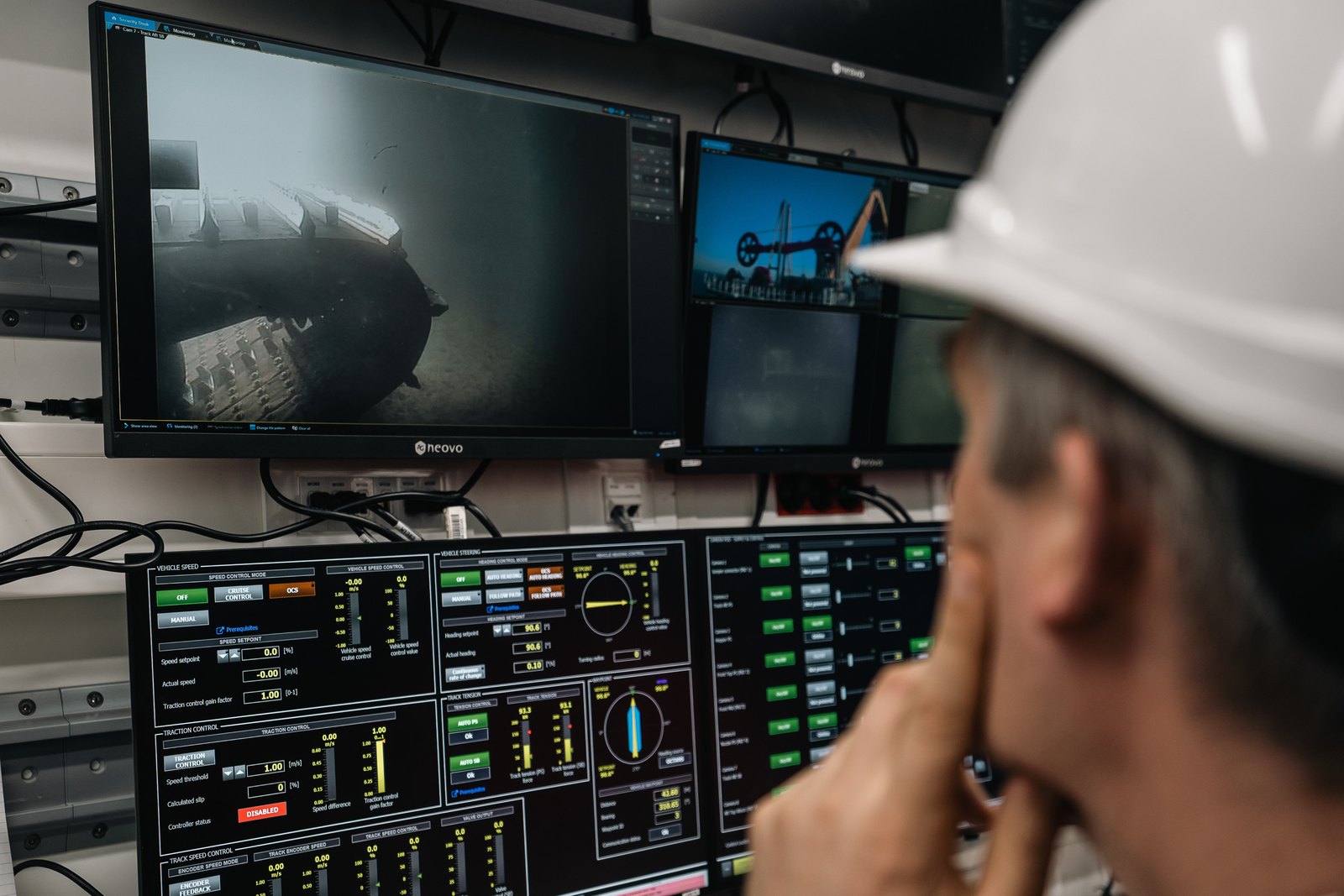
During the harbor wet-test commissioning undertaken at the Port of Rotterdam, the Allseas-designed pilot collector vehicle underwent extensive equipment testing and all systems were shown to be fully functional. Key features and functions of the robotic vehicle including pumps, nozzles, manual and auto operating modes were successfully put through their paces while multiple operators gained extensive training on the equipment.
“This is an important milestone and I am grateful to have such a competent and capable partner in Allseas to get us this far,” said Gerard Barron, CEO & Chairman of The Metals Company. “With Allseas managing the design, assembly and testing of the pilot collection system, I believe we have the best minds in the business on the case. We expect to learn a great deal from the testing program this year. So far, things have gone smoothly but I am sure the Allseas team will have their share of challenges to solve along the way. Allseas and TMC share a desire to advance the NORI project swiftly and in a capital-conscious manner. We anticipate that the pilot system being tested by Allseas will be the basis for our first commercial production system — and last week we announced a non-binding term sheet outlining the overall framework and potential commercial terms for such an upgrade.”
With initial wet-testing of the pilot collector vehicle now complete, Allseas engineers will begin preparations for full pilot nodule collection trials over an 8 km2 section of the NORI-D contract area in the Clarion Clipperton Zone of the Pacific Ocean later this year. These trials are an integral part of the International Seabed Authority’s regulatory and permitting process and the environmental impact data collected both during and after this nodule collection test work will form the basis of the application for an exploitation contract by TMC’s wholly-owned subsidiary, Nauru Ocean Resources Inc. (NORI).
Since 2019, Allseas and TMC have been working together to develop a pilot system to responsibly collect unattached polymetallic nodules from the seafloor and lift them to the surface for transportation to shore. Nodules contain high grades of nickel, manganese, copper and cobalt — key metals required for building electric vehicle batteries and renewable energy technologies.
Development of technologies to collect polymetallic nodules first began in the 1970s when oil, gas and mining majors including Shell, Rio Tinto (Kennecott) and Sumitomo, successfully conducted pilot test work in the CCZ recovering over ten thousand tons of nodules. In the decades since, the ISA was established to develop the regulatory framework to govern mineral extraction in the high seas while technology development efforts have largely focused on scaling proven nodule collection technologies and optimizing for minimal seafloor disturbance and environmental impact.
About The Metals Company
TMC the metals company Inc. (The Metals Company) is an explorer of lower-impact battery metals from seafloor polymetallic nodules, on a dual mission: (1) supply metals for the clean energy transition with the least possible negative environmental and social impact and (2) accelerate the transition to a circular metal economy. The company through its subsidiaries holds exploration rights to three polymetallic nodule contract areas in the Clarion Clipperton Zone of the Pacific Ocean regulated by the International Seabed Authority and sponsored by the governments of Nauru, Kiribati and the Kingdom of Tonga. More information is available at www.metals.co.
About Allseas
Allseas is a world-leading contractor in the offshore energy market, with dynamism, rapid progress and pioneering spirit at its core. Allseas specialise in offshore pipeline installation, heavy lift and subsea construction. The company employs over 4000 people worldwide and operates a versatile fleet of specialised heavy-lift, pipelay and support vessels, designed and developed in-house.
More information about Allseas is available at www.allseas.com