Key points
- The expedition was led by the Ocean Exploration Cooperative Institute with support from NOAA Ocean Exploration, BOEM, and USGS.
- The Orpheus AUV, built by New England startup Orpheus Ocean, is rated to depths of up to 11,000 meters.
- Field tests took place aboard Ocean Exploration Trust’s E/V Nautilus, with dives exceeding 5,600 meters.
- The AUV imaged polymetallic nodules on the seafloor during two dives, providing the first direct observations of those sites.
During a recent expedition led by the Ocean Exploration Cooperative Institute (OECI), with support from [NOAA Ocean Exploration](/about/), the Bureau of Ocean Energy Management (BOEM), and the U.S. Geological Survey (USGS), testing of a new autonomous underwater vehicle (AUV) resulted in advancement to uncrewed systems technologies and the collection of images of manganese nodule-covered seafloor in ultra-deep waters near the Mariana Trench.
Built by New England-based startup Orpheus Ocean, the small-footprint “Orpheus AUV” is advancing our understanding of some of the planet’s least explored regions at water depths up to 11,000 meters (6.8 miles). These areas include geological settings that may contain marine critical minerals such as polymetallic nodules, which are of interest to marine scientists, resource managers, and industry.
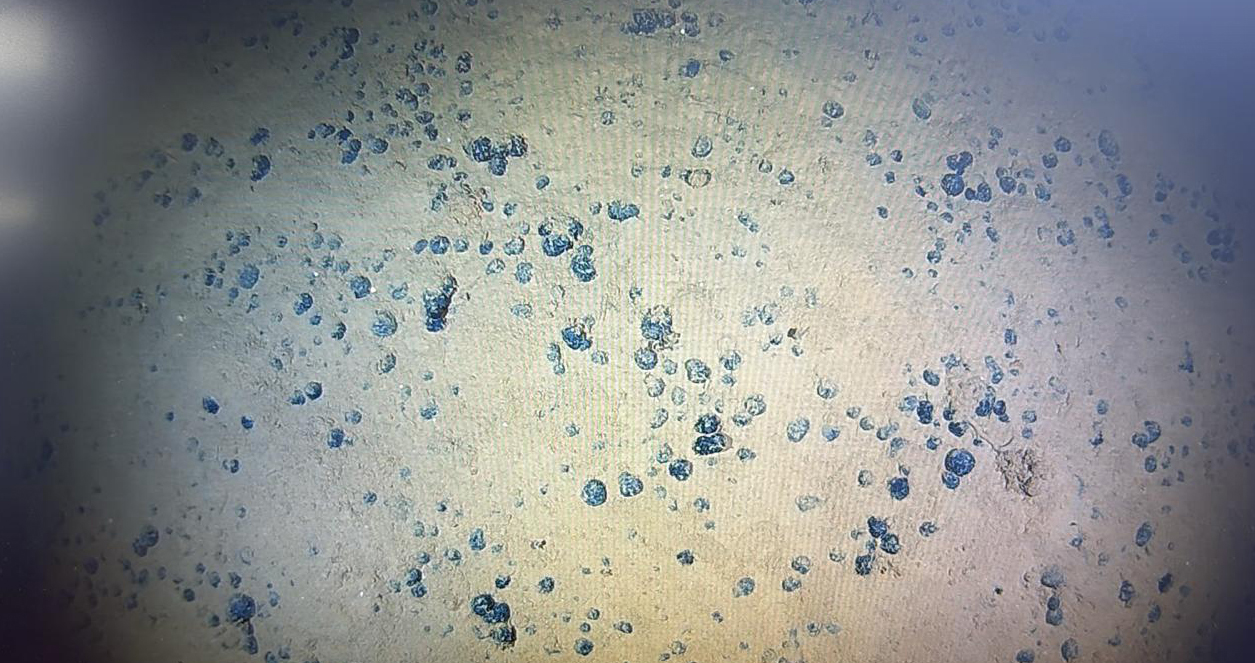
Field-testing of the new AUV took place during an expedition on Ocean Exploration Trust’s Exploration Vessel Nautilus east of the Mariana Trench. The vehicle successfully completed several dives to depths exceeding 5,600 meters (3.5 miles), imaging polymetallic nodules on the seafloor during two dives. These are the first direct observations of these sites and help NOAA, USGS, and BOEM refine their understanding of the resources that they are tasked with characterizing and managing.
A predecessor to Orpheus Ocean’s AUV was originally developed at the Woods Hole Oceanographic Institution (WHOI), and its evolution from prototype to operational vehicle has been supported over several years by NOAA Ocean Exploration and OECI. Orpheus Ocean, a startup company founded in 2024, aims to expand access to these unique, small-footprint robots to supercharge our ability to collect meaningful data that can ensure sound policy decisions about these unique environments.
Content adapted from a press release issued July 7, 2025, by OECI.