As of 2025, no company has successfully launched commercial deep-sea mining. Several who tried ended up bankrupt.
Deepsea Ventures, Inc. (USA)

The R.V. Deepsea Miner was the first prospecting vessel built by DeepSea Ventures in the 1960s. It was used for mineral exploration in Atlantic and Pacific Oceans well into the 1970s. Image by B.J. Nixon/Deepsea Ventures Inc.
Deepsea Ventures was a pioneer of deep-sea mining in the late 1960s and 1970s. Backed by U.S. industrial conglomerate Tenneco, it tested mining of polymetallic manganese nodules on the Blake Plateau (off the U.S. East Coast) in 1970 – the world’s first deep-sea mining trial. This experimental operation successfully lifted nodules from ~800 m depth using a hydraulic suction system.
Despite early technical success, Deepsea Ventures never achieved commercial mining. The company folded after roughly two decades of work. By the late 1980s, the “nascent nodule business was dead in the water,” as low metal prices and an unfavorable regulatory climate under the new U.N. Convention on the Law of the Sea undermined viability. The 1982 UNCLOS treaty imposed conditions (like technology-sharing and reserved areas for a future international seabed authority) that discouraged private investors. Combined with the immense costs and unproven economics of nodule mining, these factors led Tenneco and other backers to abandon the venture. In short, Deepsea Ventures went defunct because the expected payoff remained “uncertain” or even “imaginary” under then-current conditions. It serves as an early cautionary tale of the deep-sea mining industry’s financial and legal risks.
Nautilus Minerals, Inc. (Canada)
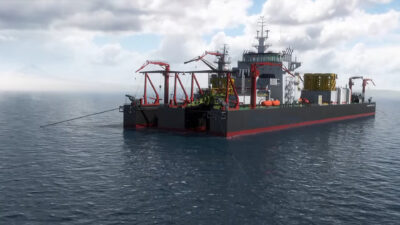
Nautilus Minerals was the first modern commercial seabed mining company, founded in 1997 (Canada). It focused on seafloor massive sulfide (SMS) deposits – high-grade copper, gold, and silver ores at hydrothermal vents. Nautilus secured a 20-year mining lease in 2011 for the Solwara 1 site in Papua New Guinea’s Bismarck Sea, making it the world’s first licensed deep-sea mining project. By the early 2010s Nautilus had developed novel underwater mining machines and even commissioned a production support vessel.
Nautilus never reached production and went bankrupt in late 2019. There were multiple causes:
- Financial and Investor Issues: The company was plagued by funding shortfalls. Nautilus’s large shareholders withdrew support before mining could start (for example, Anglo American divested its minority stake in 2018, citing environmental and social risk). In early 2019 Nautilus sought creditor protection but failed to find new buyers or investors, leading to liquidation by August 2019. Papua New Guinea’s government – which had invested in a 15% equity stake – lost an estimated 300 million kina (~US$120 million) on the project.
- Technical and Cost Overruns: The specialized equipment proved extremely costly. Notably, the shipyard building Nautilus’s production vessel cancelled the contract after Nautilus missed a payment of $18 million, leaving the company without a required ship. This default highlighted Nautilus’s precarious finances and unmet technical milestones.
- Regulatory and Partnership Disputes: A dispute arose in 2012–13 when the PNG government initially withheld funding for its share of the project, leading Nautilus to suspend mine development until an arbitration was settled. This delay hurt the project timeline and investor confidence.
- Environmental and Community Opposition: Solwara 1 faced strong local opposition in PNG. Coastal communities and civil society groups protested the “experimental” nature of seabed mining and filed court challenges. The PNG government eventually shifted stance, with Prime Minister James Marape calling Nautilus a “total failure” and supporting a moratorium on deep-sea mining. Nautilus itself acknowledged that community opposition was an ongoing obstacle.
Ultimately, Nautilus had “all the pieces” (licenses, equipment, vessel plans) but ran out of money before it could ever mine. Its bankruptcy left suppliers and the PNG state with unrecovered debts. Nautilus’s case underscores how massive capital requirements, unproven technology, and public opposition converged to sink the venture.
Neptune Minerals, Inc. (USA/Australia)
Neptune Minerals was founded in the mid-2000s as a private U.S. (Nevada-registered) company with operations in Australia and the Asia-Pacific. Like Nautilus, Neptune aimed to exploit seafloor massive sulfide systems for base and precious metals. It acquired exploration licenses in Papua New Guinea, the Solomon Islands, Vanuatu, New Zealand, and other Pacific locations. Neptune was smaller and less advanced than Nautilus – it conducted marine surveys and sample drilling (often contracting companies like Odyssey Marine for offshore services), but never built full-scale mining equipment.
By the early 2010s, Neptune Minerals had effectively collapsed due to insolvency. The company struggled to raise the enormous capital needed to pilot test mining, especially after seeing Nautilus’s challenges. By 2014, Neptune’s UK subsidiary was formally dissolved, and industry observers noted that “it appears that Neptune Minerals is insolvent”. Key reasons include:
- Financial Failures: Neptune never secured the kind of financing or major industry partners that Nautilus had. It burned through exploration funds without reaching revenue stage. Odyssey Marine Exploration (a shipwreck salvage firm) had taken a stake in Neptune, but Odyssey itself faced financial distress and sold off its Neptune shares by 2015. With no cash flow or new investors, Neptune simply ran out of money. It had negative cash flow and mounting losses, leading to dissolution.
- Technological and Execution Challenges: The technical hurdles of deep-sea mining (robotic systems, riser pipes, etc.) remained high. Developing and deploying these systems was beyond Neptune’s limited budget, especially as Nautilus was already ahead in tool development. Neptune’s business model relied on proving the resource potential through surveying – but converting that to a mine proved too costly.
- Regulatory and Environmental Factors: Neptune also faced regulatory headwinds. For instance, in New Zealand – one of its target areas – authorities and communities pushed back on seabed mining. (NZ later denied other seabed mining projects’ permits on environmental grounds.) This climate made investors wary. In sum, Neptune’s plans stalled and it ceased operations around 2014 without ever reaching the permitting or production stage.
Loke Marine Minerals (Norway)
Loke Marine Minerals was a newer entrant, founded around 2019 in Norway. It aimed to become “the world’s largest” deep-sea miner by pursuing two avenues: acquiring polymetallic nodule exploration licenses in the Pacific’s Clarion–Clipperton Zone, and exploring Norway’s extended continental shelf for sulphides and nodules. In 2021–2022 Loke gained prominence by purchasing UK Seabed Resources (UKSR) – a Lockheed Martin spin-off holding two ISA nodule exploration contracts – and by partnering with Norway’s oil services firms.
Loke Marine Minerals filed for bankruptcy on April 3, 2025. Its collapse came swiftly, only a couple of years into operations. The primary causes were:
- Investor Pull-Out and Funding Drought: Loke’s ambitious plans relied on continuous infusions of capital, but by late 2023 the company failed to attract new equity investors. Loke’s management publicly “pleaded for new investors” in 2023, to no avail. Would-be investors were apparently deterred by the growing “strong resistance against deep sea mining” globally. With no revenue and unable to roll over its loans, Loke became insolvent. In January 2025 the board instructed management to file bankruptcy after a loan came due with no refinancing.
- Regulatory Uncertainty: Loke’s bankruptcy occurred against a backdrop of regulatory delay and opposition. The International Seabed Authority had not finalized a mining code by 2023, postponing the path to exploit Loke’s Pacific licenses. Meanwhile, Norway (which had planned to open its own offshore areas for mineral extraction) paused its licensing round in late 2023 amid political debate. This uncertainty made investors skittish, as Loke’s CEO noted “political uncertainty is not something…investors like”. Essentially, Loke had no near-term prospect of an operating permit, only ongoing exploratory costs – a situation that scared off funding.
- Environmental and Public Opposition: Loke’s collapse was celebrated by environmental NGOs as a victory. Greenpeace activists had protested at a deep-sea mining conference in Bergen the very week of the bankruptcy. Loke itself acknowledged that the intense public criticism of deep-sea mining had made its investors “not immune” to fear. The company was branded a “deep sea gambler” by critics. This reputational and political pressure contributed to the capital flight.
In summary, Loke Marine Minerals failed before it could ever mine. It illustrates how, in the current climate, a deep-sea mining startup can quickly unravel if it cannot convince investors of profit potential amidst regulatory and environmental pushback. Notably, Loke’s assets (including the UKSR licenses) were put up for auction in an attempt to find new owners after the bankruptcy.
Conclusions
Each of these bankruptcies underscores the formidable challenges of deep-sea mining. Common themes include: enormous capital requirements, unproven technology, volatile commodity economics, uncertain legal regimes, and strong environmental opposition. As of 2025, no company has yet achieved commercial deep-sea mining.